Mineral Water Market Outlook:What is the current outlook for the global mineral water market?
Q: What is the current outlook for the global mineral water market?
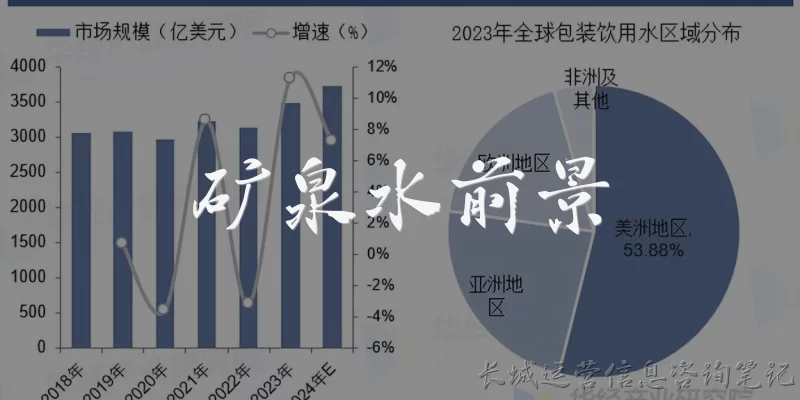
A: According to the 2024 report by Grand View Research, the global bottled water market, which includes mineral water, was valued at USD 303.5 billion in 2023 and is expected to grow at a compound annual growth rate (CAGR) of 6.2% from 2024 to 2030. The demand is driven by increasing health consciousness, urbanization, and scarcity of safe drinking water. The report highlights that still water dominates, but sparkling mineral water is gaining popularity. Asia Pacific is the fastest-growing region due to rising disposable incomes and changing lifestyles. These trends suggest a robust outlook for the mineral water market.
Q: Which regions are expected to drive growth in the mineral water market?
A: The World Health Organization (WHO) and market analysts like Statista project that Asia Pacific will be the fastest-growing region for mineral water, with a CAGR of over 7% from 2023 to 2028. This is attributed to population growth, urbanization, and increasing health awareness in countries like China and India. North America and Europe remain significant markets, with a shift towards premium and functional mineral waters. The 2023 report by the International Bottled Water Association (IBWA) notes that per capita consumption in the U.S. reached 46.5 gallons in 2022, indicating sustained demand. Emerging markets in Latin America and the Middle East also show promising growth.
Q: What are the key drivers influencing the mineral water market?
A: The Food and Agriculture Organization (FAO) of the United Nations, in its 2023 report on water resources, identifies several drivers: increasing awareness of waterborne diseases, consumer preference for healthy hydration, and inadequate public water infrastructure. Additionally, the WHO emphasizes that access to safe drinking water is a human right, but billions still lack it, pushing demand for bottled mineral water. Furthermore, premiumization trends, such as added minerals and flavors, are boosting market value. The IBWA's 2024 data shows that 64% of Americans drink bottled water regularly, citing health and convenience as primary reasons. These factors collectively drive market expansion.
Q: What challenges does the mineral water market face?
A: According to the United Nations Environment Programme (UNEP) 2023 report on plastic pollution, the mineral water industry faces significant environmental criticism due to plastic waste. Regulatory pressures, such as the EU's Single-Use Plastics Directive, aim to reduce plastic bottle usage, potentially impacting sales. The WHO also notes that while bottled water is generally safe, contamination incidents can harm consumer trust. Moreover, competition from tap water and home filtration systems, as reported by Statista in 2024, poses a threat. These challenges require companies to adopt sustainable packaging and transparent sourcing to maintain market growth.
Q: What are the emerging trends in the mineral water market?
A: The 2024 report by Mintel highlights several emerging trends: functional mineral waters with added vitamins and electrolytes, sustainable packaging using recycled PET and aluminum cans, and direct-to-consumer subscription models. The IBWA notes a rise in alkaline and hydrogen-infused waters, appealing to health-focused consumers. Additionally, the FAO reports growing interest in locally sourced mineral water to reduce carbon footprint. The Grand View Research 2024 analysis also points to smart water bottles and enhanced traceability via blockchain. These innovations are reshaping the market, catering to eco-conscious and health-driven consumers, and driving premiumization.
Dialogue about
Common scenarios of "Mineral Water Market Outlook"
【Market Analyst】 Good morning, everyone. Today we're discussing the outlook for the mineral water market. I've prepared a brief overview of current trends. Global consumption has been rising steadily, with a CAGR of about 6% over the past five years. What are your initial thoughts?
【Industry Expert】 Thanks, John. I agree that the market is growing, but it's becoming increasingly segmented. Premium and functional mineral waters are driving much of the growth, while standard still water is more commoditized. Consumers are willing to pay more for added health benefits.
【Sustainability Consultant】 That's true, but we can't ignore the environmental impact. Plastic waste is a major concern. Many companies are shifting to recycled PET or alternative packaging. I think sustainability will be a key differentiator in the next few years.
【Market Analyst】 Absolutely, Sarah. In fact, our research shows that 65% of consumers in developed markets consider eco-friendliness when choosing a water brand. That's up from 45% in 2020. So, companies that don't adapt may lose market share.
【Industry Expert】 But there's also a cost factor. Sustainable packaging often comes at a premium, and in emerging markets, price sensitivity is high. We need to balance affordability with sustainability. Perhaps innovations in biodegradable materials could help.
【Sustainability Consultant】 I agree, but I'd argue that the long-term cost of inaction is higher. Regulations are tightening, and consumers are becoming more vocal. Companies like Evian and Dasani have already made commitments to use 100% recycled plastic by 2025. It's becoming the new standard.
【Market Analyst】 Let's talk about regional differences. Asia-Pacific is the fastest-growing region, driven by urbanization and health awareness. In China, for example, bottled water consumption per capita has doubled in the last decade. How do you see that evolving?
【Industry Expert】 Asia-Pacific is indeed a powerhouse. But it's also highly competitive with local players like Nongfu Spring and Wahaha. International brands need to localize their strategies. Also, in some parts, tap water quality is improving, which could slow growth. But overall, I expect continued expansion.
【Sustainability Consultant】 And let's not forget about water scarcity. In some regions, bottling water is controversial. Companies need to be mindful of their water stewardship. It's not just about packaging; it's about the source. Certifications like the Alliance for Water Stewardship can help build trust.
【Market Analyst】 Good point. Another trend is the rise of home and office delivery (HOD) services. Especially post-pandemic, more people are subscribing to water delivery. This segment is growing at 8% annually. It also reduces plastic waste through reusable bottles.
【Industry Expert】 Yes, HOD is a bright spot. But it requires logistics and infrastructure. In dense urban areas, it works well, but rural areas are harder to serve. Still, it's a promising avenue for premium players.
【Sustainability Consultant】 I'd also highlight the importance of transparency. Consumers want to know where the water comes from, how it's treated, and what's in it. Blockchain technology could be used to trace the supply chain. That builds trust and can justify a higher price.
【Market Analyst】 Absolutely. Now, let's consider the impact of climate change. Droughts and changing precipitation patterns could affect water sources. Some companies are investing in desalination and atmospheric water generation. Do you see these as viable long-term solutions?
【Industry Expert】 Desalination is energy-intensive and expensive, but with renewable energy, it's becoming more feasible. Atmospheric water generation is still nascent but could be a game-changer in humid regions. However, for the next decade, traditional springs and aquifers will remain dominant.
【Sustainability Consultant】 But we must also consider the energy footprint of these technologies. If they're powered by fossil fuels, they're not truly sustainable. We need a holistic approach. Also, reducing plastic waste is just one part; we should also look at carbon emissions from transportation.
【Market Analyst】 That's a valid point. Carbon-neutral shipping and local production can help. Some brands are already carbon-neutral certified. It's a niche now, but could become mainstream. Let's move on to consumer behavior. What are the key drivers for purchase?
【Industry Expert】 Health, taste, and convenience are the top three. But health is broad: some seek mineral content, others want low sodium, and some prefer alkaline water. There's also a growing segment of consumers who prefer sparkling water as a soda alternative. That's booming.
【Sustainability Consultant】 And don't forget about the role of marketing. Brands that tell a compelling story about their source and sustainability efforts can command loyalty. For example, Fiji Water's marketing focuses on its pristine source, but they've also faced criticism for their carbon footprint. So it's a double-edged sword.
【Market Analyst】 Indeed. So, to sum up, the mineral water market is poised for growth, but with challenges. Key trends: premiumization, sustainability, regional expansion, and technological innovation. Companies that can navigate these will thrive. Any final thoughts?
【Industry Expert】 I'd add that consolidation is likely. Larger players may acquire niche brands to expand their portfolios. Also, watch out for new entrants from adjacent categories, like beverage giants launching their own mineral water lines. It's going to be an exciting decade.