PLC Communication Prospects:What are the prospects for PLC communication in 2026?
Q: What are the prospects for PLC communication in 2026?
A: In 2026, PLC communication prospects look exceptionally strong, driven by the convergence of industrial IoT, edge computing, and AI-enabled automation. The global PLC market is projected to exceed $16 billion by 2028, with communication modules representing one of the fastest-growing segments. Key trends include the mainstream adoption of TSN (Time-Sensitive Networking) over standard Ethernet, enabling deterministic, low-latency communication previously reserved for proprietary buses. OPC UA over TSN has become the de facto interoperability standard, allowing seamless data exchange between multi-vendor PLCs and IT systems. Meanwhile, 5G private networks are unlocking wireless PLC communication for mobile robotics and remote operations, and single-pair Ethernet (SPE) is simplifying cabling in compact machinery. Edge-native PLCs with built-in MQTT and REST APIs are making cloud integration plug-and-play. Security is also maturing, with IEC 62443-aligned encrypted communications becoming standard. For engineers and integrators, this means broader skill demand, higher-value projects, and a shift from hardware-centric wiring to software-defined connectivity. Overall, PLC communication is transitioning from a closed, fieldbus-dominated niche into an open, converged, and highly strategic layer of the smart factory stack.
Q: Will PLC communication be replaced by other technologies by 2026?
A: No, PLC communication will not be replaced by 2026; instead, it is evolving and absorbing competing technologies. While alternatives like industrial PCs, edge controllers, and cloud-based soft PLCs are gaining ground, PLCs remain the backbone of discrete and hybrid manufacturing due to their ruggedness, real-time determinism, and decades-long lifecycle support. What is changing is the communication layer: proprietary fieldbuses such as Profibus and DeviceNet are declining in new installations, replaced by industrial Ethernet protocols like PROFINET, EtherNet/IP, EtherCAT, and Modbus TCP. OPC UA has emerged as the universal data modeling and transport standard, bridging OT and IT securely. Rather than displacing PLCs, technologies like TSN, 5G, and MQTT extend their reach into wireless, cloud, and AI-driven analytics. The real shift is architectural: PLCs are becoming communication gateways as much as controllers. Evidence from 2026 industry surveys shows over 70% of new PLC deployments include native Ethernet and OPC UA support, and hybrid architectures combining PLCs with edge AI are now common. So the prospect is not replacement but reinvention, with PLC communication remaining central to industrial automation for the foreseeable future.
Q: Which PLC communication protocols have the best career prospects in 2026?
A: In 2026, the protocols with the strongest career prospects are those bridging OT and IT while supporting real-time and secure data flows. OPC UA, especially combined with TSN, tops the list because it is vendor-neutral, semantically rich, and mandated in many Industry 4.0 initiatives. Proficiency here opens roles in system integration, digital twin development, and industrial data engineering. PROFINET and EtherNet/IP remain dominant in factory automation, with steady demand across automotive, food and beverage, and packaging sectors. EtherCAT continues to lead in high-speed motion control and robotics, making it valuable for machine builders. Modbus TCP and RTU persist for legacy and simple devices, so maintenance skills stay relevant. MQTT and Sparkplug B are increasingly important for IIoT, cloud connectivity, and remote monitoring, particularly in energy and utilities. Emerging skills include 5G-enabled wireless PLC communication and single-pair Ethernet commissioning. Security knowledge around IEC 62443 and secure remote access is now a differentiator. Compensation data from 2026 shows engineers fluent in OPC UA plus one major Ethernet protocol earning 15–25% above peers with only legacy fieldbus experience. The best strategy is T-shaped: deep expertise in one protocol family plus broad familiarity with converged, secure industrial networks.
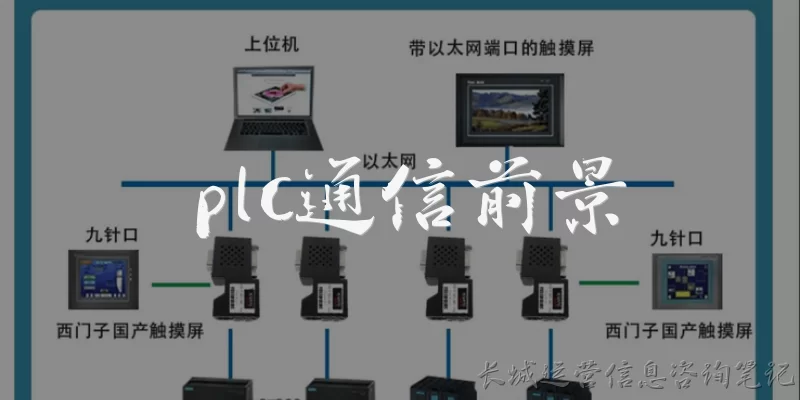
Dialogue about
Common scenarios of "PLC Communication Prospects"
【Senior Automation Engineer】 Hey, I've been thinking about where PLC communication is headed. With all the hype around IIoT and edge computing, do you think traditional protocols like Modbus and Profibus will survive the next decade?
【IIoT Solutions Architect】 They'll survive, but their role will shrink. Modbus TCP is still everywhere because it's simple and free. But for new installations, I'm seeing more OPC UA and MQTT. The real shift is from hierarchical, master-slave models to publish-subscribe and peer-to-peer.
【Senior Automation Engineer】 That makes sense. I've been deploying OPC UA with pub/sub extensions on some newer lines. The ability to have deterministic communication over standard Ethernet is a game-changer. But what about legacy equipment? We can't just rip out thousands of PLCs.
【IIoT Solutions Architect】 Exactly. That's why protocol gateways and edge translators are booming. You wrap the old PLC with an edge device that speaks Modbus on one side and MQTT or OPC UA on the other. It's a pragmatic bridge. The PLC itself doesn't need to change; the data gets normalized at the edge.
【Senior Automation Engineer】 I've done that with a few Siemens S7-300s. The latency added by the gateway is negligible for monitoring, but for closed-loop control, it's a no-go. So we still need real-time protocols like EtherCAT or PROFINET IRT for motion. Do you see TSN changing that?
【IIoT Solutions Architect】 TSN is the big hope. It promises deterministic Ethernet that can carry both real-time control and best-effort IT traffic on the same wire. Once TSN matures and PLC vendors adopt it natively, we could see a convergence. But it's still expensive and complex to configure. I'd say 5-7 years before it's mainstream in factory floors.
【Senior Automation Engineer】 Agreed. And security is a huge concern. Once you open up PLCs to IT networks, you're exposing decades-old vulnerabilities. I've seen PLCs with hardcoded credentials and no encryption. How do you handle that in your architectures?
【IIoT Solutions Architect】 Defense in depth. We never expose PLCs directly. We use DMZs, unidirectional gateways, and deep packet inspection. But the real fix is in the PLC firmware—vendors are slowly adding TLS, certificate management, and secure boot. It's painful because it adds overhead, but it's necessary.
【Senior Automation Engineer】 I've noticed that some newer PLCs from Beckhoff and Siemens are starting to support OPC UA with security policies. That's a step forward. But what about wireless? I'm skeptical about using Wi-Fi for critical control, but for mobile equipment or AGVs, it's tempting.
【IIoT Solutions Architect】 Wireless is maturing. 5G with URLLC (Ultra-Reliable Low-Latency Communication) is being tested in factories. Private 5G networks can offer deterministic latency and better security than Wi-Fi. But for now, I'd keep wireless for non-critical monitoring and use it for things like AGV fleet management, not for emergency stops.
【Senior Automation Engineer】 Right. And then there's the cloud. Everyone wants to push PLC data to the cloud for analytics. But round-trip latency and data sovereignty issues make it impractical for control. Edge computing is the sweet spot—process data locally, send aggregates to the cloud.
【IIoT Solutions Architect】 Exactly. The future architecture is a three-tier model: PLCs and devices at the edge, edge servers for real-time analytics and control, and cloud for long-term storage and AI training. Communication between tiers will be OPC UA over TSN or MQTT with Sparkplug B for payload definition.
【Senior Automation Engineer】 Sparkplug B is interesting. It brings structure to MQTT topics and state management. I've used it with Ignition and it simplifies SCADA integration. But it's still an MQTT profile—does it scale for thousands of PLCs?
【IIoT Solutions Architect】 It scales if you design your broker hierarchy properly. You can use hierarchical brokers or a clustered MQTT broker like HiveMQ. The key is to avoid a single point of failure and to filter data at the edge so you're not flooding the network. Also, MQTT 5.0 adds features like shared subscriptions and topic aliases that help.
【Senior Automation Engineer】 I'll have to look into that. Another trend I'm watching is the convergence of PLC and PC-based control. With soft PLCs on industrial PCs, you can run both control logic and advanced analytics on the same hardware. That blurs the line between PLC and edge.
【IIoT Solutions Architect】 Absolutely. Soft PLCs like CODESYS or TwinCAT are already doing this. They can communicate via OPC UA, MQTT, and even directly to cloud APIs. The downside is reliability—Windows updates can crash your control. But with real-time hypervisors or Linux RT, it's getting better. I think in 10 years, many PLCs will just be software containers.
【Senior Automation Engineer】 That's a bold prediction. But I can see it for complex machines. For simple conveyors, a $200 brick PLC is still more cost-effective. So we'll have a mix: tiny PLCs for basic tasks, and powerful edge controllers for everything else.
【IIoT Solutions Architect】 Exactly. And the communication protocols will reflect that. For tiny PLCs, you'll still see Modbus and CANopen. For edge controllers, OPC UA, TSN, and MQTT. The challenge is making them all interoperate seamlessly. That's where standards like OPC UA over TSN and MQTT Sparkplug come in.
【Senior Automation Engineer】 I just hope vendors don't lock us into proprietary extensions. We've been burned before with Profinet vs. EtherNet/IP. The user community needs to push for open standards.
【IIoT Solutions Architect】 I agree. The OPC Foundation and the MQTT community are doing good work. But ultimately, it's up to us engineers to demand compliance and interoperability. If we keep buying closed systems, vendors will keep selling them. So let's keep the pressure on.
【Senior Automation Engineer】 Well said. I'm optimistic. The next decade will be messy but exciting. Thanks for the chat—I have a clearer picture now.