Development Prospects of PCB Enterprises:What are the main growth drivers for PCB enterprises in the next five years?
Q: What are the main growth drivers for PCB enterprises in the next five years?
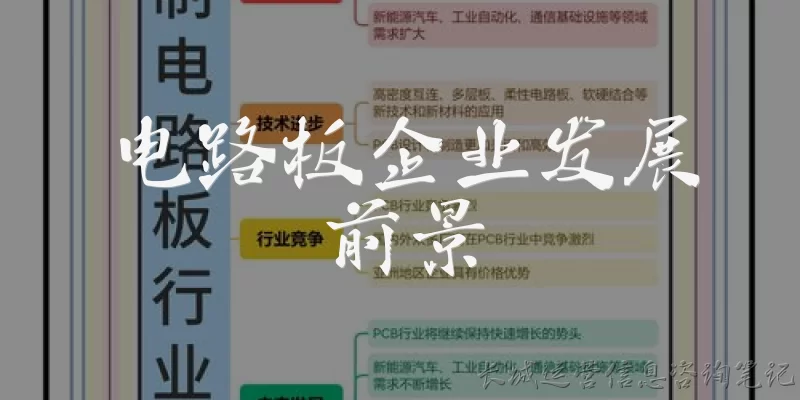
A: The primary growth drivers for PCB enterprises over the next five years will be the accelerating demand for high-density interconnect (HDI) boards, flexible and rigid-flex PCBs, and high-frequency materials. These are essential for 5G/6G infrastructure, AI servers, automotive electronics, and IoT devices. Additionally, the shift toward electric and autonomous vehicles is boosting demand for reliable, high-layer-count PCBs. Emerging applications like low-earth-orbit satellite communication and edge computing will further expand the market. Enterprises that invest in advanced manufacturing technologies, such as laser drilling and semi-additive processes, will capture higher margins. Sustainability pressures also drive demand for halogen-free and recyclable PCB materials, opening new niches. Overall, the PCB industry is expected to grow at a compound annual growth rate of 5–7% through 2029, with Asia-Pacific remaining the dominant production hub but with rising opportunities in North America and Europe due to supply chain diversification.
Q: What challenges do PCB enterprises face in expanding their development prospects?
A: PCB enterprises face several critical challenges that could hinder their development prospects. First, raw material price volatility—especially for copper, gold, and specialty resins—squeezes margins. Second, environmental regulations on wastewater and hazardous waste require costly treatment upgrades, particularly in China and the EU. Third, talent shortages in advanced process engineering and automation slow innovation. Fourth, intense competition from low-cost producers in Southeast Asia pressures prices, while trade tensions and tariffs disrupt global supply chains. Fifth, rapid technological shifts, such as the transition from subtractive to additive manufacturing, demand continuous R&D investment that many small and medium enterprises cannot sustain. Finally, customer concentration in a few large OEMs reduces bargaining power. To overcome these, PCB enterprises must pursue vertical integration, strategic partnerships, and digitalization of production to improve yield and reduce waste. Without addressing these challenges, many firms risk becoming commoditized suppliers.
Q: How can PCB enterprises differentiate themselves to improve future prospects?
A: To improve future prospects, PCB enterprises can differentiate through three main strategies. First, specialize in high-mix, low-volume or quick-turn prototyping for emerging sectors like medical devices and aerospace, where customization and speed command premium pricing. Second, invest in advanced technologies such as embedded components, 3D-printed PCBs, or IC substrate manufacturing for AI chips—these have high barriers to entry and strong demand growth. Third, adopt smart manufacturing using IoT sensors, AI-based defect detection, and digital twins to reduce lead times and improve quality, enabling just-in-time delivery for automotive and industrial clients. Additionally, offering design-for-manufacturing (DFM) consulting and supply chain transparency can build sticky customer relationships. Some firms also differentiate via sustainability: using recycled copper, bio-based laminates, and carbon-neutral production. By focusing on niche high-value segments rather than competing on price for standard boards, PCB enterprises can achieve higher margins and resilience against market cycles.
Q: What role will automation and Industry 4.0 play in the development prospects of PCB enterprises?
A: Automation and Industry 4.0 will be transformative for PCB enterprises' development prospects by addressing labor costs, yield, and flexibility. Automated optical inspection (AOI) with AI reduces defects and rework, while robotic handling and automated guided vehicles (AGVs) streamline material flow. Real-time process control using sensors and machine learning optimizes etching, plating, and drilling parameters, improving consistency for fine-line and high-layer boards. Digital twins allow virtual prototyping and predictive maintenance, cutting downtime. These technologies enable mass customization—producing small batches profitably—which is crucial for automotive and IoT clients. However, implementation requires significant capital and skilled workers, which may favor larger enterprises. Smaller firms can adopt modular automation or cloud-based MES systems to stay competitive. Overall, Industry 4.0 helps PCB enterprises reduce lead times by 30–50%, lower waste, and respond faster to demand shifts. Those that lag in automation risk losing orders to more agile competitors, especially as customers demand shorter cycles and traceability.
Words of experience
Common scenarios of "Development Prospects of PCB Enterprises"
【Industry Analyst】 Good morning, everyone. Today we're discussing the development prospects of PCB enterprises. The PCB industry is often seen as a barometer of the electronics sector. What are your initial thoughts on the current landscape?
【PCB Company CEO】 From my perspective, the industry is at a critical juncture. We've seen steady growth driven by 5G, IoT, and automotive electronics. However, challenges like raw material price volatility and environmental regulations are putting pressure on margins.
【Technology Expert】 I agree. Technological advancements are reshaping the industry. High-density interconnect (HDI) and flexible PCBs are in high demand for consumer electronics. Companies that don't invest in R&D for advanced materials and miniaturization risk falling behind.
【Industry Analyst】 That's a good point. Let's dig deeper into market trends. According to recent reports, the global PCB market is expected to grow at a CAGR of around 5% over the next five years, with Asia-Pacific leading the way. How can companies in other regions compete?
【PCB Company CEO】 Competition is fierce, especially from Chinese manufacturers who benefit from economies of scale and government support. To stay competitive, Western companies need to focus on high-mix, low-volume production and niche markets like aerospace and medical devices, where quality and reliability are paramount.
【Technology Expert】 Absolutely. Automation and smart manufacturing are key. By integrating AI and IoT in production lines, we can improve yield and reduce costs. Also, the shift towards sustainable practices, such as using recyclable materials and reducing water usage, can be a differentiator.
【Industry Analyst】 Sustainability is indeed becoming a major factor. Investors and customers are increasingly demanding eco-friendly products. How do you see this affecting the supply chain?
【PCB Company CEO】 It's forcing us to reevaluate our suppliers. We're looking for partners who can provide green materials and adhere to strict environmental standards. This might increase costs initially, but it's necessary for long-term viability and brand reputation.
【Technology Expert】 Additionally, the rise of 5G and millimeter-wave technology requires PCBs with low signal loss and high thermal conductivity. This opens up opportunities for specialized materials like PTFE and ceramic-filled substrates. Companies that can innovate here will have a competitive edge.
【Industry Analyst】 Let's talk about geographic shifts. With tensions in global trade, some companies are moving production to Southeast Asia or Mexico to diversify risk. Is this a viable strategy?
【PCB Company CEO】 Diversification is smart, but it comes with challenges. Setting up new facilities requires significant capital and skilled labor, which may not be readily available. However, it can mitigate tariff impacts and ensure supply chain resilience. We're considering a plant in Vietnam.
【Technology Expert】 I'd add that digitalization can help manage distributed operations. Cloud-based ERP and MES systems allow real-time monitoring and coordination across sites. This is crucial for maintaining quality and efficiency.
【Industry Analyst】 What about talent acquisition? The PCB industry often struggles to attract young engineers. How can companies address this?
【PCB Company CEO】 We need to collaborate with universities and offer internships and training programs. Also, highlighting the innovative aspects of PCB technology, like its role in electric vehicles and renewable energy, can make it more appealing to the younger generation.
【Technology Expert】 Yes, and fostering a culture of innovation within the company is vital. Encouraging employees to suggest improvements and investing in continuous learning can retain talent and drive progress.
【Industry Analyst】 Looking ahead, what emerging applications do you think will drive the next wave of growth for PCB enterprises?
【PCB Company CEO】 Autonomous vehicles and advanced driver-assistance systems (ADAS) will be huge. Each vehicle contains numerous PCBs for sensors, control units, and infotainment. Also, the Internet of Things (IoT) for smart homes and cities will require vast numbers of PCBs.
【Technology Expert】 Don't forget about 6G research and quantum computing. These will demand PCBs with unprecedented performance characteristics. We're already seeing prototypes with embedded components and 3D printing of PCBs, which could revolutionize the industry.
【Industry Analyst】 It sounds like the future is both promising and challenging. To summarize, key strategies for PCB enterprises include investing in R&D, embracing automation and sustainability, diversifying geographically, and attracting talent. Any final thoughts?
【PCB Company CEO】 I'd emphasize agility. The market can shift quickly, so companies must be adaptable and customer-centric. Building strong partnerships with customers and suppliers will be crucial for navigating uncertainties.