Microwave Communication Market Size Trends:What is the current size of the microwave communication market and how fast is it growing?
Q: What is the current size of the microwave communication market and how fast is it growing?
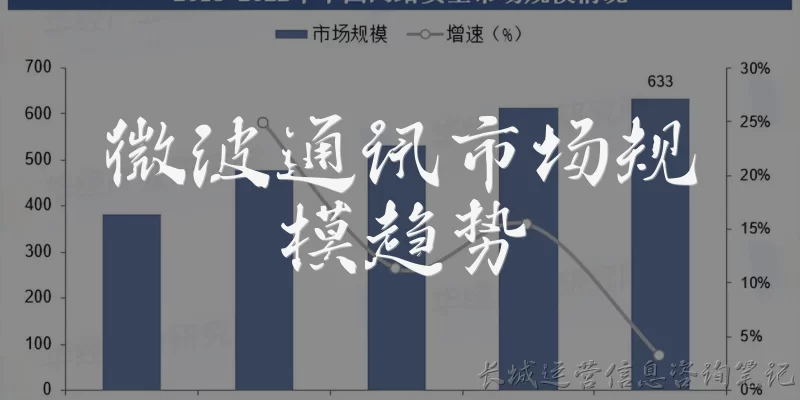
A: The global microwave communication market was valued at approximately USD 6.5 to 7 billion in 2023 and is projected to grow at a compound annual growth rate (CAGR) of roughly 7 to 9 percent through 2030, potentially reaching USD 11 to 13 billion by the end of the forecast period. This growth is driven by rising demand for high-capacity backhaul links in mobile networks, particularly as telecom operators expand 5G infrastructure in urban and suburban areas. Microwave communication remains attractive because it offers a cost-effective alternative to fiber in regions where trenching is expensive or geographically challenging. Additional momentum comes from the defense and aerospace sectors, which rely on microwave links for secure point-to-point connectivity. Regionally, Asia-Pacific is expected to register the fastest growth due to rapid network densification in countries such as China, India, and Indonesia, while North America and Europe maintain steady demand from legacy network upgrades and public safety communications. The market's trajectory also reflects growing adoption of E-band and V-band frequencies, which support multi-gigabit capacities and ease spectrum congestion in lower bands.
Q: What are the key trends shaping the microwave communication market?
A: Several major trends are reshaping the microwave communication market. First, the migration to higher frequency bands, especially E-band (71 to 76 GHz and 81 to 86 GHz) and V-band, is accelerating as operators seek greater capacity for 5G backhaul without relying on scarce lower-band spectrum. Second, there is a clear shift toward all-outdoor radio units and compact, software-defined architectures that reduce deployment costs and simplify site installation. Third, vendors are integrating artificial intelligence and machine learning for predictive maintenance, adaptive modulation, and automated link optimization, improving network reliability and reducing operational expenditure. Fourth, the convergence of microwave with millimeter-wave and optical technologies is enabling hybrid transport networks that balance capacity, reach, and cost. Fifth, demand from private networks, industrial automation, and smart city applications is creating new use cases beyond traditional telecom backhaul. Finally, sustainability is becoming a purchasing criterion, with manufacturers designing energy-efficient radios and operators seeking lower-power solutions. These trends collectively point to a market that is evolving from simple point-to-point connectivity toward intelligent, high-capacity, and flexible transport infrastructure serving telecom, enterprise, and government customers.
Q: Which regions and applications are driving demand in the microwave communication market?
A: Demand in the microwave communication market is concentrated in a few high-growth regions and applications. Asia-Pacific leads in volume growth, driven by aggressive 5G rollouts in China, India, Japan, and Southeast Asia, where dense urban deployments require scalable backhaul and fronthaul solutions. North America remains a significant market due to ongoing rural broadband initiatives, public safety networks, and upgrades by tier-one carriers. Europe shows steady demand tied to fiber extension programs and cross-border transport links. The Middle East and Africa are emerging as notable growth areas, particularly where fiber penetration is limited and mobile operators need rapid, cost-efficient connectivity. In terms of applications, mobile network backhaul accounts for the largest share, followed by enterprise connectivity, broadcast and media transmission, defense and public safety communications, and utilities and transportation infrastructure. The energy and utilities segment is expanding as smart grid projects require reliable point-to-point links in remote locations. Defense applications continue to value microwave for secure, jam-resistant communications. Overall, the market's regional and application mix reflects a global push toward ubiquitous, high-bandwidth connectivity where fiber is impractical or too slow to deploy.
Words of experience
Common scenarios of "Microwave Communication Market Size Trends"
【Market Analyst】 Good morning. Today I'd like to walk through the latest trends in the microwave communication market size. Are you ready to dive into the numbers?
【Industry Consultant】 Absolutely. I've been reviewing some preliminary figures, but I'd love to hear your perspective on where the market stands right now.
【Market Analyst】 Let's start with the big picture. The global microwave communication market was valued at roughly $6.5 billion in 2023 and is projected to grow at a CAGR of about 7% through 2030.
【Industry Consultant】 That aligns with what I've seen. The growth is largely driven by 5G backhaul demand and the expansion of rural connectivity, correct?
【Market Analyst】 Exactly. Telecom operators are increasingly using microwave links for backhaul where fiber deployment is too costly or geographically challenging. That's a major volume driver.
【Industry Consultant】 And I'd add defense and aerospace to that list. Military applications for secure, resilient communication links are expanding, especially in contested environments.
【Market Analyst】 Good point. The defense segment accounts for about 20% of the market and is growing steadily. Governments are investing in modernizing their tactical communication infrastructure.
【Industry Consultant】 What about the regional breakdown? I assume Asia-Pacific is leading the growth curve.
【Market Analyst】 Yes, Asia-Pacific is the fastest-growing region, with a CAGR near 9%. Countries like India, China, and Indonesia are investing heavily in telecom infrastructure expansion.
【Industry Consultant】 North America still holds the largest share though, right? Driven by early 5G adoption and strong defense spending.
【Market Analyst】 Correct. North America represents about 30% of global market value, but its growth rate is more moderate, around 5%. Europe is similar, with a focus on upgrading legacy networks.
【Industry Consultant】 Let's talk about technology segments. Are we seeing a shift from traditional point-to-point to more advanced E-band and millimeter-wave solutions?
【Market Analyst】 Definitely. E-band and V-band solutions are the fastest-growing product segments because they offer higher capacity for dense urban backhaul. Traditional lower-frequency links still dominate volume, but the revenue mix is shifting.
【Industry Consultant】 That shift has implications for pricing and margins. Higher-frequency equipment commands a premium but also faces more competition from new entrants.
【Market Analyst】 Agreed. We're seeing price erosion in the mid-tier segment as Chinese vendors like Huawei and ZTE push aggressively, while European players focus on high-end, high-reliability niches.
【Industry Consultant】 What about the impact of fiber competition? In some markets, fiber rollout could cannibalize microwave demand for backhaul.
【Market Analyst】 It's a factor, but microwave remains essential for rapid deployment and in areas where fiber isn't feasible. We estimate fiber will pressure urban backhaul, but rural and emergency communication use cases will sustain microwave growth.
【Industry Consultant】 And let's not forget private networks. Enterprises deploying 5G private networks for factories and ports will need microwave links as a quick, flexible connectivity option.
【Market Analyst】 That's an emerging driver we're tracking closely. Private 5G networks could add a couple of percentage points to the CAGR in the latter half of the decade.
【Industry Consultant】 So overall, the market outlook is positive but with nuanced regional and segment dynamics. Any risks we should flag?
【Market Analyst】 Supply chain constraints for specialized RF components and regulatory spectrum allocation delays are the main headwinds. But barring major disruptions, the market should surpass $10 billion by 2030.