China's infant formula market size:What is the current size of China's infant formula market?
Q: What is the current size of China's infant formula market?
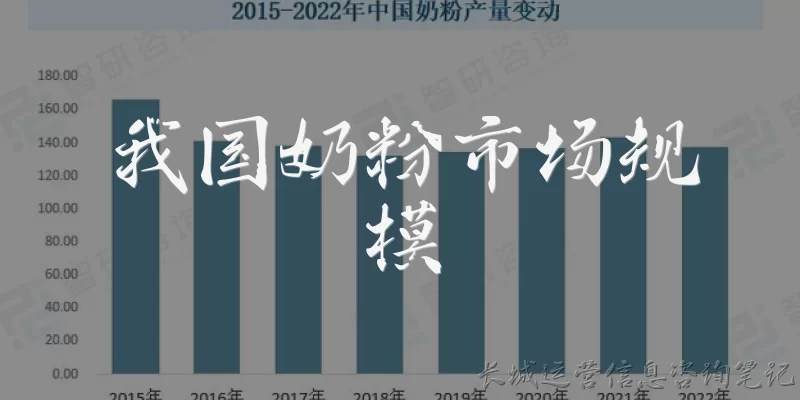
A: China's infant formula market is the largest in the world, with an estimated retail value of approximately $25 billion to $30 billion in recent years. However, the market has experienced a decline from its peak of over $30 billion around 2020-2021, due to a significant drop in the birth rate. In 2022, the market size was around $27 billion, and it continued to shrink slightly in 2023. The volume of infant formula consumed also fell, from about 700,000 tons in 2020 to around 600,000 tons in 2023. Despite the contraction, China remains a critical market for both domestic and international brands, accounting for roughly half of global infant formula sales. The market is expected to stabilize as birth rates level off and premiumization trends support higher value per unit.
Q: How has the birth rate affected China's infant formula market size?
A: The sharp decline in China's birth rate has had a direct and profound impact on the infant formula market size. Newborns dropped from 17.86 million in 2016 to 9.02 million in 2023, a nearly 50% decrease. Since infant formula consumption is tied to the number of infants, this led to a significant reduction in overall volume demand. Consequently, the market size in value terms fell from a peak of over $30 billion in 2020 to around $25 billion in 2023. The decline was partially offset by rising average prices, as parents increasingly choose premium and specialized formulas. However, volume declines have outpaced price increases, causing overall market contraction. Many brands have responded by consolidating, cutting costs, or exiting the market. Going forward, the market size will largely depend on whether birth rates stabilize and whether premiumization can continue to drive value growth.
Q: What are the key drivers and challenges for China's infant formula market size?
A: Key drivers include premiumization, where parents opt for higher-priced formulas with added ingredients like probiotics and A2 protein, which boosts value despite lower volumes. Government support for domestic brands and stricter regulations have also reshaped the market, increasing trust and market share for local players. Additionally, urbanization and rising disposable incomes support higher spending per child. Challenges are significant: the declining birth rate is the primary drag, reducing the customer base. Intense competition among domestic and international brands leads to price wars and margin pressure. Regulatory changes, such as the new national standards implemented in 2023, require reformulation and compliance costs. Also, shifting consumer preferences toward breastfeeding and alternative dairy products add pressure. Overall, the market size is expected to remain large but may continue to shrink moderately in the short term, with value growth depending on premium products and innovation.
Words of experience
Common scenarios of "China's infant formula market size"
【Market Analyst】 Good morning, everyone. Today we're discussing the market size of infant formula in China. Let's start with an overview. Can anyone provide the latest figures?
【Industry Expert】 Sure. According to recent reports, China's infant formula market was valued at approximately 170 billion RMB in 2023. However, it has been experiencing a slight decline due to lower birth rates.
【Investor】 That's interesting. I heard it peaked around 2019-2020. What was the peak value?
【Industry Expert】 Yes, the market peaked at around 190 billion RMB in 2020. Since then, it has gradually decreased.
【Market Analyst】 What are the key drivers behind this trend?
【Industry Expert】 The primary factor is the declining birth rate in China. In 2023, the number of newborns dropped to about 9 million, down from 14.65 million in 2016.
【Investor】 So the market is shrinking. Are there any segments that are still growing?
【Industry Expert】 Yes, premium and organic formula segments are growing as parents focus more on quality and safety. Also, the goat milk formula segment is expanding.
【Market Analyst】 How about the competitive landscape? Who are the major players?
【Industry Expert】 The market is dominated by international brands like Nestlé, Danone, and Reckitt Benckiser, but domestic brands like Feihe, Yili, and Junlebao have gained significant share, especially after the 2008 melamine scandal.
【Investor】 What's the market share of domestic vs. international brands now?
【Industry Expert】 As of 2023, domestic brands account for about 60% of the market, while international brands hold the remaining 40%.
【Market Analyst】 That's a big shift. What about distribution channels? Are online sales important?
【Industry Expert】 Absolutely. E-commerce, including cross-border platforms, has become a major channel, especially for imported formula. Offline channels like mother-and-baby stores still dominate but are losing share.
【Investor】 Given the declining birth rate, do you see any potential for market growth in the future?
【Industry Expert】 Growth will likely come from premiumization and product innovation, such as A2 protein, goat milk, and organic formulas. Also, the government's three-child policy might slow the decline, but it's not expected to reverse the trend significantly.
【Market Analyst】 What about regulations? The government has tightened rules on infant formula. How does that affect the market?
【Industry Expert】 Stricter regulations have raised barriers to entry, leading to consolidation. Smaller players have exited, and the market is now dominated by a few large companies. This could lead to higher prices and better quality.
【Investor】 So, overall, the market size is shrinking but becoming more concentrated and premium. Is that a fair summary?
【Industry Expert】 Yes, exactly. The total market size may continue to decline slightly, but the value per unit is increasing, and the competitive landscape is evolving.