China's Rail Transit Development Policy:What are the main objectives of China's rail transit development policy?
Q: What are the main objectives of China's rail transit development policy?
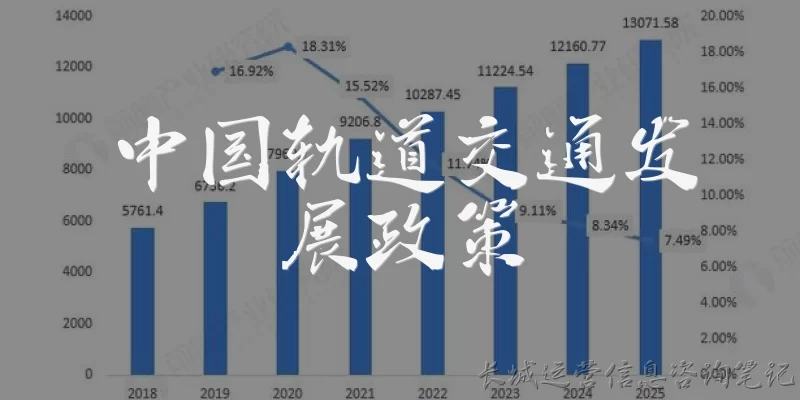
A: China's rail transit development policy aims to build a comprehensive, efficient, and sustainable urban and intercity rail network. The primary objectives include alleviating traffic congestion in major cities, promoting regional economic integration, reducing carbon emissions, and supporting urbanization. The policy prioritizes the expansion of metro and light rail systems in cities with populations over 3 million, while also advancing high-speed intercity railways to connect urban clusters like the Yangtze River Delta and Greater Bay Area. Additionally, the policy emphasizes technological innovation, such as driverless trains and smart ticketing, to enhance operational efficiency. By 2025, the government plans to have over 10,000 kilometers of urban rail transit in operation. These goals are aligned with broader national strategies, including the 14th Five-Year Plan and the Made in China 2025 initiative, which seek to position China as a global leader in rail transit technology and infrastructure.
Q: How does China's rail transit policy address funding and investment challenges?
A: China's rail transit policy tackles funding challenges through a multi-source investment model that combines government subsidies, local government financing vehicles (LGFVs), public-private partnerships (PPPs), and land value capture. The central government provides targeted fiscal support, especially for projects in less developed regions, while local governments are encouraged to diversify financing by leveraging land appreciation along transit corridors. For instance, transit-oriented development (TOD) allows municipalities to auction land near new stations at premium prices, generating revenue for construction. Additionally, the policy promotes the issuance of special bonds and the establishment of rail transit investment funds. Recent reforms aim to reduce reliance on local debt by attracting private capital through concession agreements and operational concessions. However, the policy also imposes strict approval criteria to prevent excessive borrowing, requiring cities to meet GDP, population, and fiscal revenue thresholds before starting new projects. This balanced approach seeks to maintain financial sustainability while continuing rapid expansion.
Q: What are the social and environmental impacts of China's rail transit development policy?
A: China's rail transit development policy yields significant social and environmental benefits. Socially, it improves mobility for millions of commuters, reduces travel time, and enhances access to jobs, education, and healthcare, particularly in peri-urban areas. The policy also promotes social equity by providing affordable public transportation options, which is crucial for low-income households. Environmentally, rail transit is a low-emission mode of transport; shifting passengers from cars to trains helps cut greenhouse gas emissions and air pollution. For example, a single metro line can reduce CO2 emissions by tens of thousands of tons annually. Additionally, the policy encourages transit-oriented development, which curbs urban sprawl and preserves green spaces. However, challenges remain, such as the high energy consumption during construction and potential displacement of communities. To mitigate these, the policy includes provisions for environmental impact assessments and resettlement plans. Overall, the policy supports China's dual carbon goals of peaking emissions by 2030 and achieving carbon neutrality by 2060.
Words of experience
Common scenarios of "China's Rail Transit Development Policy"
【Host】 欢迎来到今天的《政策观察》节目。我是主持人李明。今天我们要聊的是中国轨道交通发展政策。我们请到了交通政策研究专家王教授和城市规划师张女士。欢迎两位。
【Expert Wang】 谢谢主持人。很高兴能和大家交流。
【Planner Zhang】 谢谢邀请。轨道交通是城市发展的重要骨架,这个话题很有意义。
【Host】 王教授,能否先介绍一下中国轨道交通发展政策的核心目标是什么?
【Expert Wang】 核心目标可以概括为三点:一是构建多层次、一体化的轨道交通网络;二是支撑新型城镇化和区域协调发展;三是推动绿色低碳出行。政策强调科学规划、有序建设、安全运营。
【Host】 张女士,从城市规划角度看,这些政策如何落地?
【Planner Zhang】 规划层面强调‘站城融合’,也就是以轨道交通站点为核心进行TOD开发。政策要求线路走向与城市空间结构匹配,避免‘摊大饼’。同时,不同制式如地铁、轻轨、市域快轨要分工明确。
【Host】 近年来很多城市都在建设地铁,是否存在过热问题?
【Expert Wang】 确实有过一段时期的建设热潮。为此国家提高了审批门槛,比如对GDP、财政收入、人口规模提出要求,并严格控制建设规模。政策导向已从‘规模扩张’转向‘提质增效’。
【Host】 张女士,您怎么看待一些三四线城市谋划轨道交通?
【Planner Zhang】 要因地制宜。不是所有城市都适合地铁,有些适合BRT或有轨电车。政策鼓励采用经济适用的制式,避免盲目攀比。关键看客流需求和财政可持续性。
【Host】 那么,都市圈和城市群层面的轨道交通政策有什么特点?
【Expert Wang】 重点是‘四网融合’,即干线铁路、城际铁路、市域铁路和城市轨道交通的衔接。政策支持利用既有铁路开行市域列车,推动跨区域通勤。比如长三角、粤港澳都在探索。
【Host】 投融资方面,政策有哪些创新?
【Planner Zhang】 除了政府投入,政策鼓励PPP、专项债、REITs等。特别是REITs,可以盘活存量资产。同时强调土地综合开发收益反哺轨道交通,形成良性循环。
【Host】 安全运营也是重点吧?
【Expert Wang】 是的。政策要求建立全生命周期安全管理体系,包括建设质量、运营维护、应急响应。近年来还强调智慧运维,利用大数据和AI进行风险预警。
【Host】 技术标准方面,中国轨道交通有哪些自主创新?
【Planner Zhang】 中国已形成完整的技术标准体系,比如CBTC信号系统、全自动运行系统。政策鼓励国产化装备应用,同时推动中国标准走出去,参与‘一带一路’项目。
【Host】 绿色低碳如何体现?
【Expert Wang】 轨道交通本身就是绿色交通,但政策还要求节能降耗,比如再生制动能量回收、光伏发电、绿色车站设计。此外,通过‘轨道+慢行’接驳,减少小汽车依赖。
【Host】 对于乘客来说,政策带来哪些便利?
【Planner Zhang】 最直接的是线网更密、换乘更方便。政策推动‘一卡通’互联互通、移动支付、安检互认。未来还会实现不同制式之间的‘无缝换乘’。
【Host】 有人担心轨道交通建设带来地方债务风险,您怎么看?
【Expert Wang】 这确实是政策关注点。国家要求严格评估财政承受能力,严禁违规举债。同时通过TOD和REITs等市场化手段,降低对政府补贴的依赖。关键要量力而行。
【Host】 未来十年,中国轨道交通发展政策会有哪些趋势?
【Planner Zhang】 我认为有四个趋势:一是从增量建设转向存量优化;二是更加注重都市圈同城化;三是智能化、绿色化深度融合;四是政策更强调经济可持续性。
【Host】 王教授,您对政策制定者有什么建议?
【Expert Wang】 建议加强顶层设计,避免各自为政;建立动态评估机制,根据人口和客流变化调整规划;同时完善票价机制和补贴机制,让轨道交通既公益又可持续。
【Host】 张女士,对普通市民有什么建议?
【Planner Zhang】 多使用轨道交通,参与公众咨询。轨道交通发展需要市民理解和支持,比如站点周边的接驳、共享单车停放等,都需要大家共同维护。
【Host】 最后,请两位用一句话总结中国轨道交通发展政策的核心。
【Expert Wang】 科学规划、有序建设、安全运营、可持续发展,服务人民美好出行。
【Planner Zhang】 以轨道引领城市,以政策保障民生,让绿色出行成为首选。
【Host】 感谢两位的精彩分享。今天的节目就到这里,我们下期再见。