Research on the Development of Lithium Battery Separators:What is the primary function of a lithium battery separator, and why is its development critical?
Q: What is the primary function of a lithium battery separator, and why is its development critical?
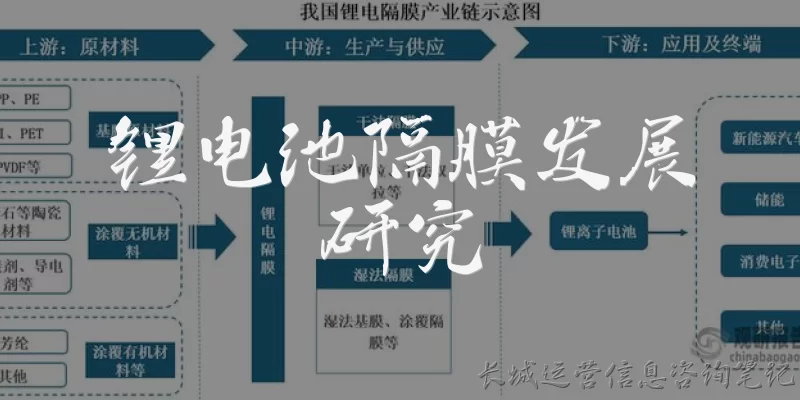
A: The primary function of a lithium battery separator is to physically separate the anode and cathode while allowing lithium ions to pass through during charging and discharging. It prevents short circuits and ensures safe operation. Its development is critical because it directly impacts battery safety, energy density, power performance, and cycle life. As demand grows for electric vehicles and grid storage, researchers focus on thinner, stronger, and more thermally stable separators. Advances in materials like polyolefin, ceramic-coated, and bio-based membranes are essential to meet higher energy and safety standards without compromising ionic conductivity.
Q: What are the current mainstream materials for lithium battery separators, and what are their limitations?
A: Current mainstream materials are polyolefins, specifically polyethylene (PE) and polypropylene (PP), due to their excellent mechanical strength, chemical stability, and low cost. However, they have limitations: poor thermal stability above 130°C, which can cause shrinkage and short circuits; low wettability with polar electrolytes; and limited ability to support high-energy-density electrodes. These drawbacks drive research into ceramic-coated separators, polyimide, aramid, and cellulose-based materials. Each alternative aims to improve thermal resistance, electrolyte uptake, and mechanical toughness while maintaining thinness and low ionic resistance for high-performance lithium batteries.
Q: How does ceramic coating improve lithium battery separator performance?
A: Ceramic coating, typically using alumina or boehmite particles, enhances separator performance by improving thermal stability and mechanical strength. The ceramic layer prevents shrinkage at high temperatures, reducing the risk of short circuits. It also increases electrolyte wettability and ionic conductivity, which can improve rate capability. Moreover, the coating provides a physical barrier against lithium dendrite penetration, enhancing safety. Research shows that ceramic-coated separators can withstand temperatures up to 200°C or more. However, challenges include added weight, reduced flexibility, and potential detachment of the coating, which ongoing studies aim to address through binder optimization and nano-scale particle engineering.
Q: What recent innovations are emerging in lithium battery separator research?
A: Recent innovations include bio-based separators from cellulose, chitin, and lignin, offering sustainability and high thermal stability. Another trend is the development of smart separators with thermal-responsive or shutdown mechanisms, such as phase-change materials or polymer blends that close pores at elevated temperatures. Researchers are also exploring solid-state and gel separators for next-generation batteries. Additionally, 3D-nanofiber separators via electrospinning provide high porosity and tunable pore size. Coatings with graphene oxide or MXenes enhance mechanical and electrochemical properties. These innovations aim to balance safety, performance, cost, and environmental impact, pushing lithium battery technology toward higher energy density and longer life.
Q: What are the key challenges and future directions for lithium battery separator development?
A: Key challenges include achieving ultrathin separators (below 10 µm) with high mechanical strength, uniform porosity, and thermal stability. Balancing safety with ionic conductivity remains difficult. Scalable manufacturing of advanced materials like ceramics or nanofibers at low cost is another hurdle. Future directions involve multifunctional separators that combine thermal shutdown, dendrite suppression, and flame retardancy. Researchers also focus on sustainable materials and recycling. For solid-state batteries, separator-free designs may emerge, but for liquid-electrolyte systems, hybrid organic-inorganic composites and smart responsive membranes are promising. Collaboration across materials science, electrochemistry, and manufacturing is essential to meet the demands of electric vehicles and renewable energy storage.
Words of experience
Common scenarios of "Research on the Development of Lithium Battery Separators"
【Professor Chen】 Good morning, everyone. Today's meeting is on lithium battery separator development. I'm Professor Chen from the Materials Science Department. Let's start with a brief overview from each of you.
【Dr. Liu】 I'm Dr. Liu, specializing in polymer processing. Separators are critical for battery safety and performance. Current mainstream is polyolefin separators, but they have limited thermal stability.
【Dr. Wang】 I'm Dr. Wang, focusing on nanomaterials. I've been working on ceramic-coated separators to enhance thermal resistance. Our tests show a 20% improvement in shrinkage temperature.
【Dr. Liu】 That's promising, Dr. Wang. But how does the ceramic coating affect ionic conductivity? We need to balance safety with performance.
【Dr. Wang】 Good point. We've optimized the coating thickness to 2 micrometers, which maintains porosity above 50% and doesn't significantly hinder ion transport.
【Professor Chen】 What about manufacturing scalability? Ceramic coatings can be expensive. Have you considered cost-effective alternatives?
【Dr. Wang】 We're exploring low-cost alumina and boehmite. Also, we're testing a water-based binder to reduce environmental impact.
【Dr. Liu】 I'd like to add that we're developing a new stretching process for polyolefin separators to increase mechanical strength without sacrificing porosity.
【Professor Chen】 Interesting. Could you elaborate on the stretching parameters? How do they affect pore size distribution?
【Dr. Liu】 We use a biaxial stretching with controlled temperature gradients. By adjusting draw ratios, we can achieve pore sizes from 50 to 200 nm, which is optimal for lithium-ion transport.
【Dr. Wang】 That aligns well with our coating approach. Maybe we can combine your stretched separator with our coating to get the best of both worlds.
【Dr. Liu】 I agree. Let's collaborate on a hybrid separator. We can test thermal stability and electrochemical performance.
【Professor Chen】 Excellent. What about characterization methods? We need to standardize testing protocols.
【Dr. Wang】 We use SEM for morphology, DSC for thermal analysis, and EIS for ionic conductivity. For mechanical properties, we do tensile tests.
【Dr. Liu】 We also use mercury intrusion porosimetry for pore size distribution. But it's destructive, so we complement with gas adsorption.
【Professor Chen】 Good. Let's also consider in-situ techniques to observe separator behavior during cycling. That could reveal degradation mechanisms.
【Dr. Wang】 We've started using in-situ XRD to monitor structural changes. It's challenging but gives valuable insights.
【Dr. Liu】 For the hybrid separator, we should also evaluate cost. Can we produce it at scale with existing equipment?
【Dr. Wang】 We might need to modify coating lines, but the stretching process can be integrated. I'll draft a cost analysis.
【Professor Chen】 Great. Let's set a timeline: Dr. Liu, you'll provide stretched samples by next month. Dr. Wang, you'll coat them and run initial tests. We'll reconvene in six weeks. Thank you all.