
Current Status of Third-Party Logistics Demand:What is the current status of third-party logistics demand in 2026?
Q: What is the current status of third-party logistics demand in 2026?
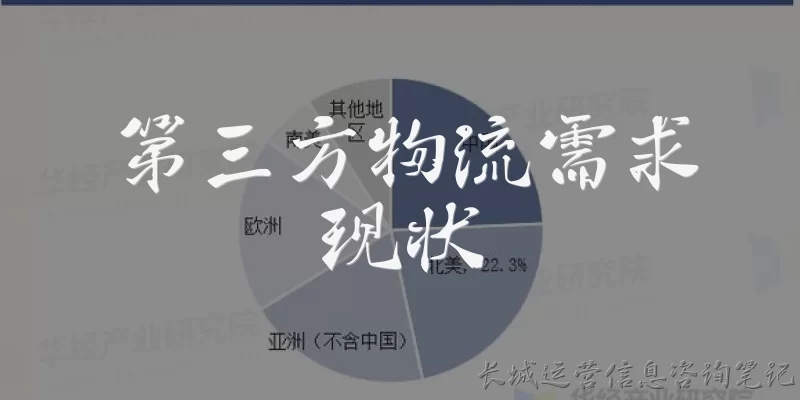
A: As of 2026, demand for third-party logistics (3PL) services remains robust but is shifting toward integrated, technology-enabled solutions. According to the 2026 Armstrong & Associates 'Global 3PL Market Report,' global 3PL revenues grew 7.2% year-over-year, reaching $1.5 trillion. Demand is particularly strong in e-commerce fulfillment, cold chain, and reverse logistics. The Council of Supply Chain Management Professionals (CSCMP) 2026 State of Logistics Report notes that shippers are increasingly outsourcing to 3PLs to manage volatility and reduce fixed costs. However, growth is uneven: while Asia-Pacific and North America lead in volume, European demand is tempered by regulatory pressures. Overall, 3PL demand in 2026 is characterized by a shift from basic transportation to value-added services such as data analytics, sustainability reporting, and near-shoring support.
Q: Which industries are driving third-party logistics demand in 2026?
A: In 2026, third-party logistics (3PL) demand is primarily driven by e-commerce, retail, automotive, and healthcare. The 2026 'State of the Third-Party Logistics Industry' by MHI and Deloitte highlights that e-commerce accounts for 38% of new 3PL contracts, as retailers seek scalable fulfillment and last-mile solutions. The automotive sector follows, with 3PLs managing just-in-time parts and battery supply chains for electric vehicles. Healthcare, especially cold-chain pharmaceuticals, is a fast-growing segment, per the 2026 IQVIA report on biopharma logistics. Additionally, the technology and electronics industry relies on 3PLs for reverse logistics and repair services. Demand from these sectors is not just for cost reduction but for resilience, visibility, and compliance with ESG standards, making 3PL partnerships more strategic than ever.
Q: How is technology reshaping third-party logistics demand in 2026?
A: Technology is fundamentally reshaping third-party logistics (3PL) demand in 2026 by enabling real-time visibility, automation, and predictive analytics. The 2026 Gartner 'Magic Quadrant for 3PL Services' reports that over 70% of shippers now require 3PLs to provide API-based tracking and AI-driven exception management. Demand is rising for 3PLs that offer warehouse robotics, autonomous mobile robots (AMRs), and digital twins. According to the 2026 DHL Trend Radar, shippers are prioritizing 3PLs with blockchain for traceability and IoT sensors for cold chain. This tech-driven demand means 3PLs must invest heavily in IT infrastructure, or risk losing contracts. Consequently, the market is seeing a split: tech-savvy 3PLs capture premium demand, while traditional providers face margin pressure.
Q: What are the key challenges affecting third-party logistics demand in 2026?
A: Despite strong demand, third-party logistics (3PL) providers in 2026 face significant challenges that could temper growth. The 2026 'Logistics Manager' survey identifies capacity constraints, labor shortages, and geopolitical disruptions as top issues. The Russia-Ukraine conflict and Red Sea tensions continue to reroute supply chains, increasing demand for flexible 3PL services but also raising costs. According to the 2026 World Bank Logistics Performance Index, port congestion and customs delays remain problematic. Additionally, shippers are demanding greener logistics, pressuring 3PLs to adopt electric fleets and carbon-neutral warehousing, which requires capital investment. Finally, inflation and interest rates are making some shippers insource or renegotiate contracts. Thus, while demand is high, 3PLs must navigate a complex operating environment to capture it profitably.
Dialogue about
Common scenarios of "Current Status of Third-Party Logistics Demand"
【Logistics Manager】 Good morning, everyone. Thank you for joining this meeting. Today, we're here to discuss the current status of third-party logistics demand. As you know, the logistics landscape has been evolving rapidly. Let's start by sharing observations on recent demand trends.
【Supply Chain Analyst】 Thanks, John. From my analysis, we've seen a significant surge in e-commerce logistics demand, especially in the last quarter. The shift to online shopping has accelerated due to the pandemic, and 3PL providers are struggling to keep up with the volume, especially in last-mile delivery.
【Operations Director】 I agree, but it's not just e-commerce. We're also seeing increased demand from manufacturing sectors for just-in-time inventory management. Companies are outsourcing more to 3PLs to reduce costs and improve efficiency. However, capacity constraints are a major issue.
【Logistics Manager】 That's a good point. What about the impact of global supply chain disruptions? How are 3PLs adapting to these challenges?
【Supply Chain Analyst】 Disruptions have forced 3PLs to diversify their networks. Many are investing in technology like AI and IoT for real-time tracking and predictive analytics. But there's still a gap in demand forecasting accuracy, leading to inefficiencies.
【Operations Director】 Also, labor shortages are exacerbating the situation. Warehouses and drivers are in short supply, driving up costs. 3PLs are raising prices, which is affecting demand from smaller businesses that can't afford the hikes.
【Logistics Manager】 So, are we seeing a shift in demand patterns? Are customers becoming more selective about 3PL services?
【Supply Chain Analyst】 Yes, customers are demanding more value-added services like reverse logistics, customization, and sustainability. 3PLs that can offer these are seeing higher demand, while traditional providers are losing ground.
【Operations Director】 Additionally, the rise of regional 3PLs is notable. They offer more personalized services and faster delivery times, which is attractive to local businesses. National 3PLs are facing stiff competition.
【Logistics Manager】 What about the role of technology in shaping demand? Are customers expecting more digital integration?
【Supply Chain Analyst】 Absolutely. Customers want seamless integration with their own systems, real-time visibility, and data analytics. 3PLs that lag in technology adoption are losing contracts. It's becoming a baseline requirement.
【Operations Director】 And let's not forget the impact of sustainability. More companies are prioritizing green logistics, so 3PLs with eco-friendly practices are in higher demand. This is a growing trend that's likely to continue.
【Logistics Manager】 Given these trends, what are the key challenges and opportunities for 3PLs in the current market?
【Supply Chain Analyst】 Challenges include capacity constraints, cost management, and technological upgrades. Opportunities lie in niche markets, value-added services, and strategic partnerships. 3PLs that can innovate will thrive.
【Operations Director】 I'd add that flexibility and scalability are crucial. Demand can fluctuate wildly, so 3PLs need to be able to scale up or down quickly. Those that can't will struggle.
【Logistics Manager】 How do you see demand evolving in the next 1-2 years? Any predictions?
【Supply Chain Analyst】 I predict continued growth in e-commerce and cold chain logistics. Also, more demand for same-day delivery. 3PLs will need to invest in automation and micro-fulfillment centers to meet these expectations.
【Operations Director】 I agree, and I think we'll see more consolidation in the industry as 3PLs merge to gain scale and capabilities. Also, demand for 4PL services might increase as companies seek end-to-end solutions.
【Logistics Manager】 Thank you both for your insights. It's clear that the 3PL demand landscape is dynamic and challenging. We'll need to keep a close eye on these trends to stay competitive. Let's reconvene next month to review progress.
【Supply Chain Analyst】 Sounds good. I'll prepare a detailed report on demand forecasts and technological impacts for the next meeting.
【Operations Director】 I'll look into our capacity and labor strategies. Thanks, everyone.