Pearl Industry Development Analysis:What are the key factors driving the growth of the pearl industry?
Q: What are the key factors driving the growth of the pearl industry?
A: The pearl industry's growth is driven by several interconnected factors. Rising disposable incomes, especially in emerging markets like China and India, have boosted demand for luxury jewelry, including pearls. Technological advancements in pearl cultivation, such as improved grafting techniques and water quality management, have increased yield and quality while reducing mortality rates. Additionally, the shift toward sustainable and ethical luxury has favored pearls over mined gemstones, as pearls are renewable and often farmed with lower environmental impact. E-commerce and social media have also expanded market reach, allowing smaller producers to access global customers. Finally, diversification into pearl-based cosmetics and wellness products has opened new revenue streams, further propelling industry expansion.
Q: What challenges does the pearl industry currently face in terms of sustainability?
A: The pearl industry faces significant sustainability challenges. Overproduction in some regions, particularly in China and Japan, has led to price volatility and environmental strain on coastal ecosystems. Pollution, ocean acidification, and rising water temperatures threaten oyster health and pearl quality. Disease outbreaks in farms can cause massive losses. Moreover, the industry struggles with traceability and certification, making it difficult to ensure ethical practices. Labor issues, including fair wages and safe working conditions, are also concerns in some producing countries. To address these, stakeholders are investing in eco-friendly farming methods, such as integrated multi-trophic aquaculture, and promoting certification schemes like those from the Responsible Jewellery Council. However, widespread adoption remains slow, and regulatory frameworks are still developing.
Q: How is technology transforming pearl farming and processing?
A: Technology is revolutionizing pearl farming and processing in multiple ways. In farming, remote sensing and IoT sensors monitor water temperature, salinity, and pH in real time, enabling precise adjustments to optimize oyster health. Automated feeding systems and underwater drones reduce labor costs and improve efficiency. Genetic selection and hatchery technologies have led to faster-growing, disease-resistant oysters. In processing, laser and X-ray techniques now assess pearl quality internally without damaging them, while automated sorting systems use AI and machine vision to grade pearls by size, shape, luster, and color. Blockchain is being piloted for traceability, allowing consumers to verify a pearl's origin and journey. These innovations increase yield, consistency, and transparency, but require capital investment, which may disadvantage small-scale farmers unless supported by cooperatives or government programs.
Q: What are the major regional trends in pearl production and consumption?
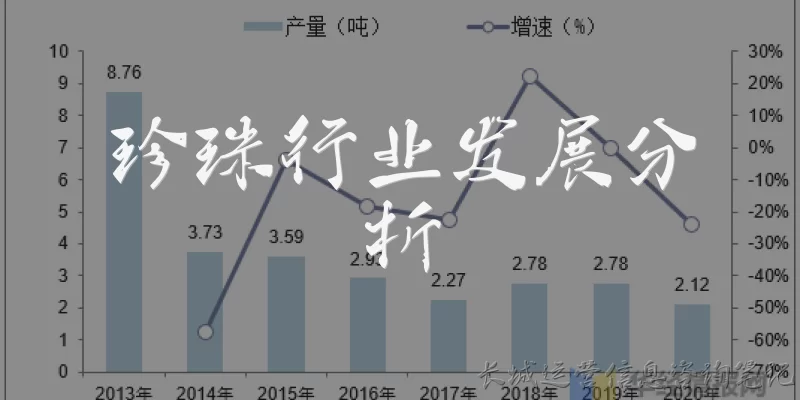
A: Pearl production and consumption show distinct regional trends. China dominates freshwater pearl production, accounting for over 90% of global supply, but faces oversupply and quality issues. Japan remains a leader in Akoya pearls, focusing on high-quality, premium markets, though output has declined due to aging farmers. Australia and Indonesia are key for South Sea pearls, benefiting from pristine waters and strong branding. French Polynesia is the primary source of Tahitian pearls, with strict export controls to maintain value. On the consumption side, the United States and Europe are mature markets favoring classic designs, while Asia—especially China, India, and Southeast Asia—shows rapid growth in demand for both fine and fashion pearls. The Middle East is emerging as a luxury hub. Overall, production is shifting toward sustainability and value addition, while consumption is becoming more global and diverse.
Dialogue about
Common scenarios of "Pearl Industry Development Analysis"
【Host】 Welcome to our industry analysis series. Today we're focusing on the pearl industry. I'm joined by Dr. Emily Chen, a marine biologist and pearl farming expert, and Mr. James Whitfield, a market analyst specializing in luxury goods. Welcome to you both.
【Dr. Emily Chen】 Thank you for having me. The pearl industry is fascinating because it combines biology, environmental science, and luxury commerce.
【James Whitfield】 Glad to be here. Pearls are one of the few organic gems, and their market dynamics are quite unique compared to diamonds or gold.
【Host】 Let's start with an overview. How would you describe the current state of the global pearl industry?
【James Whitfield】 The industry has seen steady growth over the past decade, driven by rising demand from Asia, particularly China. The market is segmented into akoya, south sea, Tahitian, and freshwater pearls, each with distinct price points and consumer bases.
【Dr. Emily Chen】 From a production standpoint, we're seeing a shift towards more sustainable practices. Climate change is affecting oyster health and pearl quality, so farmers are investing in research to adapt.
【Host】 Emily, could you elaborate on the environmental challenges facing pearl farmers?
【Dr. Emily Chen】 Certainly. Rising sea temperatures can lead to increased disease in oysters, and ocean acidification affects shell formation. Additionally, pollution and habitat destruction are major concerns. Some regions, like Japan's Akoya farms, have experienced significant mortality events.
【James Whitfield】 And these environmental issues have economic repercussions. For instance, supply shortages can drive up prices, but if quality suffers, it can damage brand reputation, especially for luxury pearls.
【Host】 What about consumer trends? Are we seeing changes in what buyers want?
【James Whitfield】 Yes, there's a growing preference for traceable, ethically sourced pearls. Consumers, especially millennials and Gen Z, want to know the origin and environmental impact. Brands that can tell a compelling sustainability story are gaining market share.
【Dr. Emily Chen】 I agree. Certification programs like those from the Marine Stewardship Council are becoming more important. Also, there's innovation in pearl farming, such as using hatchery-raised oysters to reduce pressure on wild populations.
【Host】 James, how does the pearl industry compare to other luxury gemstones in terms of market resilience?
【James Whitfield】 Pearls have a unique appeal because they don't require cutting or polishing, and they are culturally significant in many societies. However, they are more susceptible to economic downturns than gold, as they are purely decorative. But the rise of pearl jewelry in fashion has helped stabilize demand.
【Host】 Emily, what technological advancements are impacting pearl production?
【Dr. Emily Chen】 Biotechnology is playing a bigger role. For example, genetic selection for disease-resistant oysters, and improved nucleation techniques that increase pearl quality and yield. There's also research into lab-grown pearls, though that's still niche.
【James Whitfield】 Lab-grown pearls could disrupt the market, similar to lab-grown diamonds. But pearls have a natural allure that might be hard to replicate. It will be interesting to see how consumers respond.
【Host】 What are the key regions for pearl production and how are they performing?
【Dr. Emily Chen】 Australia, Indonesia, and the Philippines are major producers of South Sea pearls. Japan is known for Akoya, and French Polynesia for Tahitian pearls. China dominates freshwater pearl production. Each region faces its own challenges, but overall, production is stable with some growth in sustainable farms.
【James Whitfield】 And from a trade perspective, China is both a major producer and consumer, which gives it significant influence on global prices. The US and Europe remain important markets for high-end pearls.
【Host】 As we wrap up, what do you see as the biggest opportunities and threats for the pearl industry in the next five years?
【Dr. Emily Chen】 The biggest opportunity is the growing demand for sustainable and ethical products. If the industry can innovate and adapt to environmental changes, it can thrive. The threat is climate change—if we don't mitigate its effects, pearl production could decline significantly.
【James Whitfield】 I'd add that opportunities lie in emerging markets and online sales, especially through social commerce. The threat is economic uncertainty, which can hit luxury spending. But pearls have a timeless appeal, so I'm optimistic.
【Host】 Thank you both for your insights. It's clear that the pearl industry is at a crossroads, balancing tradition with innovation and sustainability. We'll be watching closely. That's all for today's discussion.