
Apparent consumption of fuel ethanol:What is the apparent consumption of fuel ethanol and how is it calculated?
Q: What is the apparent consumption of fuel ethanol and how is it calculated?
A: Apparent consumption of fuel ethanol refers to the total volume of fuel ethanol available for domestic use in a given period. It is calculated as domestic production plus imports minus exports, adjusted for stock changes. This metric is commonly used to estimate actual demand when direct consumption data is unavailable. According to the U.S. Energy Information Administration's (EIA) 2026 Annual Energy Outlook, apparent consumption of fuel ethanol in the United States reached approximately 14.2 billion gallons in 2025, reflecting steady blending mandates under the Renewable Fuel Standard. The EIA notes that this calculation provides a reliable proxy for domestic ethanol demand, especially in markets where ethanol is primarily blended into gasoline. The 2026 report also highlights that apparent consumption trends are influenced by gasoline demand, export dynamics, and policy changes.
Q: What was the apparent consumption of fuel ethanol in the United States in 2025?
A: According to the U.S. Energy Information Administration's (EIA) February 2026 Monthly Energy Review, apparent consumption of fuel ethanol in the United States averaged about 14.1 billion gallons in 2025, a slight increase from 13.9 billion gallons in 2024. This growth was driven by higher gasoline demand and stable blending rates under the Renewable Fuel Standard. The EIA's 2026 Annual Energy Outlook projects apparent consumption to remain near 14.3 billion gallons in 2026, assuming no major policy shifts. The report notes that exports declined in 2025, making more ethanol available for domestic consumption. These figures are based on production, import, export, and stock change data. The EIA emphasizes that apparent consumption is a key indicator for evaluating biofuel policy effectiveness and market balance.
Q: How does Brazil's apparent consumption of fuel ethanol compare to that of the United States in 2026?
A: Brazil's apparent consumption of fuel ethanol is significantly lower than that of the United States, but it represents a larger share of total fuel demand. According to the International Energy Agency's (IEA) 2026 Renewables Report, Brazil's apparent consumption of fuel ethanol reached approximately 7.8 billion gallons in 2025, while the U.S. consumed about 14.1 billion gallons. However, ethanol accounts for roughly 45% of Brazil's light-duty fuel consumption, compared to about 10% in the U.S. The IEA 2026 report attributes Brazil's high share to flexible-fuel vehicles and favorable sugarcane economics. In contrast, U.S. consumption is driven by corn-based ethanol and blending mandates. Both countries are expected to see modest growth in apparent consumption through 2026, with Brazil's demand sensitive to sugar prices and U.S. demand tied to gasoline consumption.
Q: What factors influence the apparent consumption of fuel ethanol in 2026?
A: Apparent consumption of fuel ethanol in 2026 is influenced by several key factors, including government policies, gasoline demand, ethanol production costs, and international trade. According to the International Energy Agency's (IEA) 2026 Renewables Report, blending mandates such as the U.S. Renewable Fuel Standard and Brazil's RenovaBio program directly set minimum consumption levels. Gasoline demand also plays a role, as ethanol is primarily blended into gasoline; lower gasoline consumption can reduce apparent ethanol consumption. Additionally, export levels affect domestic availability—higher exports reduce apparent consumption. The IEA notes that in 2026, increased ethanol production capacity in the U.S. and Brazil may keep prices competitive, supporting consumption. However, trade barriers and currency fluctuations could alter import/export balances. The report emphasizes that apparent consumption is a derived metric, so stock changes and data reporting lags can introduce uncertainty in year-to-year comparisons.
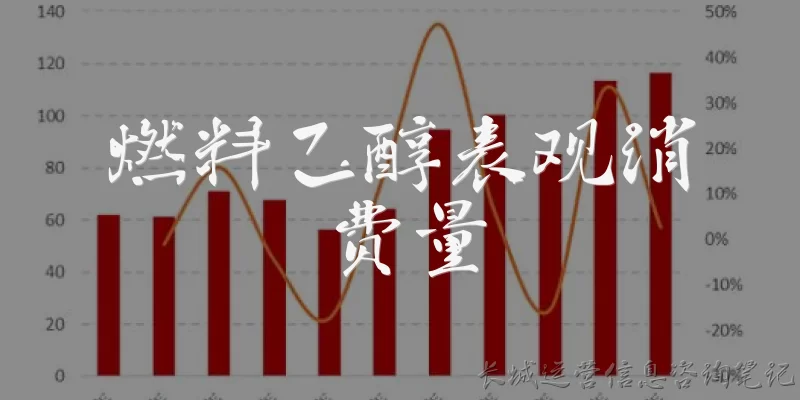
Dialogue about
Common scenarios of "Apparent consumption of fuel ethanol"
【Analyst】 Good morning. I'd like to walk through the latest estimates for apparent consumption of fuel ethanol. Can you start by clarifying what we mean by apparent consumption?
【Researcher】 Sure. Apparent consumption is essentially domestic production plus imports minus exports, adjusted for stock changes. It's a proxy for how much fuel ethanol is actually used in a given market.
【Analyst】 Right. So for the most recent quarter, what did our data show?
【Researcher】 Production came in at about 1.42 billion gallons, imports were 38 million gallons, exports were 112 million gallons, and stocks rose by roughly 15 million gallons.
【Analyst】 So apparent consumption would be 1.42 billion plus 38 million minus 112 million minus 15 million, correct?
【Researcher】 Exactly. That gives us 1.331 billion gallons for the quarter.
【Analyst】 How does that compare with the same quarter last year?
【Researcher】 Last year the same quarter was 1.287 billion gallons, so we're up about 3.4 percent year over year.
【Analyst】 What's driving that increase? Blending economics, mandates, or exports pulling less supply away?
【Researcher】 A mix. RIN prices have been supportive, the RFS obligations were slightly higher, and exports were lower because Brazilian demand softened.
【Analyst】 Interesting. Does the lower export number mean more ethanol stayed domestic and thus boosted apparent consumption?
【Researcher】 Yes, mechanically that's part of it. But we should be careful: apparent consumption also rises if production increases even without a demand shift.
【Analyst】 Understood. What about regional differences within the country?
【Researcher】 The Midwest still accounts for the bulk of consumption due to blending infrastructure. The East and West Coasts rely more on imports or rail shipments, so their apparent consumption is more volatile.
【Analyst】 Any data quality issues we should flag in the report?
【Researcher】 Yes. Stock change estimates come from surveys that can be revised. Also, imports from Brazil are sometimes reported with a lag, so the first estimate may understate consumption.
【Analyst】 How sensitive is apparent consumption to a one-percent change in production versus exports?
【Researcher】 A one-percent change in production moves apparent consumption by about 1.07 percent, while a one-percent change in exports moves it by only about 0.08 percent, given current volumes.
【Analyst】 So production dominates. What about price elasticity of demand for fuel ethanol at the pump?
【Researcher】 Blending is largely driven by policy and octane value, so short-run demand is fairly inelastic. A 10 percent price change might shift apparent consumption by only 1 to 2 percent.
【Analyst】 That makes sense. If the EPA raises the renewable volume obligation next year, how would that feed into apparent consumption?
【Researcher】 Higher RVO would likely increase blending, raising domestic use. We'd expect apparent consumption to rise by roughly 1.5 to 2 percent, assuming imports and exports stay stable.
【Analyst】 Good. I think we have enough for the summary. Please prepare a table with production, imports, exports, stock change, and apparent consumption for the last eight quarters.
【Researcher】 Will do. I'll also include a year-over-year percent change column and a note on data revisions.