Future Trends in Drilling Platforms:What are the key future trends in drilling platform design and operation?
Q: What are the key future trends in drilling platform design and operation?
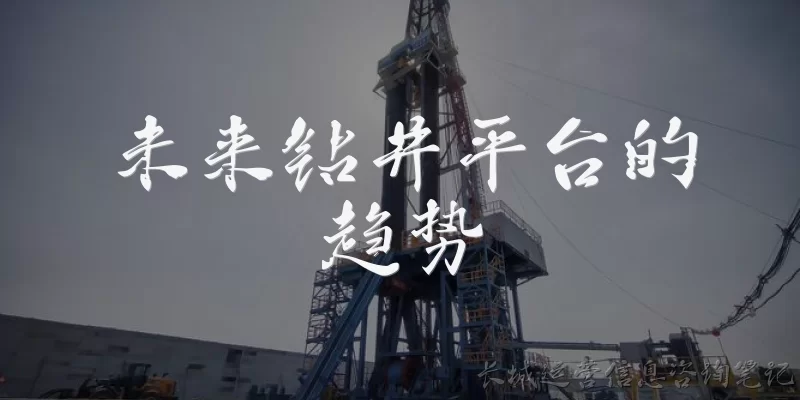
A: The future of drilling platforms is shaped by automation, digitalization, and sustainability. Automated drilling systems using AI and machine learning are reducing human error and improving efficiency. Digital twins allow real-time monitoring and predictive maintenance, cutting downtime. Environmentally, platforms are moving toward electrification, with hybrid power systems and shore power connections to lower emissions. Modular and lightweight designs are also emerging, enabling faster deployment and lower costs. Additionally, unmanned or minimally manned platforms are being explored for remote operations, especially in harsh environments. These trends aim to make drilling safer, more efficient, and more environmentally friendly, while adapting to fluctuating energy demands and stricter regulations. Overall, the industry is shifting from traditional mechanical approaches to smart, integrated, and sustainable solutions.
Q: How will automation and robotics change future drilling platforms?
A: Automation and robotics are set to revolutionize drilling platforms by enhancing safety, precision, and efficiency. Robotic systems can handle repetitive and dangerous tasks such as pipe handling and inspection, reducing human exposure to hazardous conditions. Autonomous drilling controls optimize parameters in real time, leading to faster penetration rates and less wear on equipment. Drones and crawler robots will perform inspections in hard-to-reach areas, while automated systems manage inventory and logistics. This shift will require fewer workers on the rig, lowering operational costs and risks. However, it also demands new skills in data analysis and remote supervision. Ultimately, automation will enable 24/7 operations with consistent performance, making drilling platforms more productive and resilient in the face of challenging environments and market pressures.
Q: What role will renewable energy play in the future of drilling platforms?
A: Renewable energy will play an increasingly significant role in powering future drilling platforms, driven by the need to reduce carbon footprints and comply with environmental regulations. Offshore platforms may integrate wind turbines, solar panels, and energy storage systems to supplement or replace diesel generators. Hybrid power systems that combine renewables with traditional fuels can lower emissions and fuel costs. Additionally, platforms could connect to shore power from renewable grids, eliminating on-site emissions entirely. Some concepts even propose using geothermal energy from the well itself to power operations. These innovations not only cut greenhouse gases but also improve energy efficiency and operational reliability. As renewable technologies mature and become more cost-effective, their adoption in drilling platforms will likely accelerate, aligning the industry with global sustainability goals.
Q: How might digital twins and AI transform future drilling platform management?
A: Digital twins and AI are poised to transform drilling platform management by creating virtual replicas of physical assets and processes. A digital twin continuously receives data from sensors on the platform, enabling real-time monitoring, simulation, and analysis. AI algorithms then process this data to predict equipment failures, optimize drilling parameters, and recommend corrective actions before problems escalate. This predictive maintenance reduces unplanned downtime and extends asset life. AI can also optimize energy consumption, improve safety by identifying risky patterns, and support autonomous decision-making. Managers gain a holistic view of operations, allowing for remote collaboration and faster response to changing conditions. As these technologies advance, they will lead to more intelligent, self-optimizing platforms that are safer, more efficient, and more cost-effective, ultimately reshaping how drilling operations are managed.
Words of experience
Common scenarios of "Future Trends in Drilling Platforms"
【Dr. Elena Voss】 Good morning, everyone. Today we're exploring future trends in drilling platforms. I'm Dr. Elena Voss, a senior researcher in offshore engineering. Joining me is Jack Morrison, a veteran drilling operations manager. Jack, what's the most significant change you've seen recently?
【Jack Morrison】 Thanks, Dr. Voss. The biggest shift is automation. We're seeing more remotely operated drilling systems, reducing human exposure to hazardous environments. But it's not just about safety; it's also about efficiency.
【Dr. Elena Voss】 Absolutely. Automation ties into digitalization. I've been studying how AI and machine learning optimize drilling parameters in real-time. What's your take on the practical implementation?
【Jack Morrison】 It's promising, but we face challenges with data integration. Legacy systems don't always play nice with new AI tools. However, when it works, we've seen a 20% increase in rate of penetration.
【Dr. Elena Voss】 That's impressive. Another trend is the move towards unmanned platforms. With advances in robotics and remote monitoring, we could see fully autonomous drilling in the next decade. What are the hurdles?
【Jack Morrison】 Regulatory approval and cybersecurity are big ones. If a platform is unmanned, it's vulnerable to cyber attacks. We need robust encryption and fail-safes. Also, public perception: people are wary of robots without human oversight.
【Dr. Elena Voss】 True. Speaking of oversight, there's also a trend towards digital twins—virtual replicas of physical platforms. They allow predictive maintenance and scenario testing. Have you used them?
【Jack Morrison】 Yes, we piloted a digital twin on our North Sea platform. It helped us predict equipment failures before they happened. But it requires significant computing power and skilled personnel to interpret the data.
【Dr. Elena Voss】 That leads to workforce transformation. Future drilling engineers will need skills in data science, AI, and robotics. Are we preparing the next generation?
【Jack Morrison】 Not fast enough. Universities are updating curricula, but industry needs to invest in continuous training. We're also seeing more cross-disciplinary teams—geologists working with data scientists.
【Dr. Elena Voss】 Agreed. Another area is sustainability. Drilling platforms are under pressure to reduce carbon footprint. Electrification, renewable integration, and carbon capture are being explored. What's feasible?
【Jack Morrison】 Electrification is gaining traction, especially with power from shore. But for remote locations, we're looking at hydrogen fuel cells or small modular reactors. The latter is controversial but could be a game-changer.
【Dr. Elena Voss】 Nuclear has its risks, but advanced reactors are safer. Let's not forget about methane leak detection—new sensors and drones are helping minimize emissions. How effective are they?
【Jack Morrison】 Very. We've deployed drones with LiDAR and infrared cameras to detect leaks. It's faster and more accurate than manual inspections. But again, it's about integrating these into standard operations.
【Dr. Elena Voss】 Integration is key. Looking ahead, what about deepwater and ultra-deepwater drilling? New materials and designs are pushing boundaries. Any trends there?
【Jack Morrison】 Yes, we're seeing lighter, stronger composites and 3D-printed parts for customized components. Also, riserless drilling and dual-gradient systems are enabling deeper exploration. But costs are high, so economics must align.
【Dr. Elena Voss】 Economics often drive innovation. With fluctuating oil prices, platforms must be more flexible. Modular designs that can be repurposed or relocated are emerging. Thoughts?
【Jack Morrison】 Modularity is smart. We can't afford stranded assets. But it requires standardization across the industry. Organizations like IADC are working on that, but it's slow.
【Dr. Elena Voss】 Standardization also helps with interoperability. Finally, let's touch on collaboration. The future seems to require more partnerships—between operators, tech companies, and governments. Do you agree?
【Jack Morrison】 Absolutely. No single entity can tackle these challenges alone. Sharing data and best practices will accelerate progress. It's an exciting time, but we must balance innovation with safety and environmental responsibility.