China Pharmacy Competition Data:What is China Pharmacy Competition Data?
Q: What is China Pharmacy Competition Data?
A: China Pharmacy Competition Data refers to compiled information on competitive dynamics within China's pharmaceutical retail sector, including metrics like store counts, market share, sales performance, and regional distribution among major pharmacy chains. This data is gathered from industry reports, company disclosures, and market research firms such as IQVIA or Menet. It helps analysts, investors, and operators understand consolidation trends, pricing pressures, and expansion strategies. The data often covers listed companies like Dashenlin, Yifeng, and Laobaixing, alongside smaller regional players. Accurate competition data supports strategic decisions, benchmarking, and regulatory compliance assessments in a rapidly evolving market.
Q: Which companies are key contributors to China Pharmacy Competition Data?
A: Major contributors include listed pharmacy chains such as Dashenlin, Yifeng Pharmacy, Laobaixing, and Jianzhijia, plus regional leaders like Huiren and Chengda. These companies disclose store openings, closures, revenue, and same-store growth in annual reports, which feed into competition datasets. Third-party sources like Menet, AskCI, and China Pharmacy Association also aggregate data. Additionally, industry conferences and government filings provide input. Together, these sources create a comprehensive view of market concentration, competitive intensity, and operational benchmarks, enabling stakeholders to track who is gaining or losing share in China's fragmented but consolidating pharmacy retail landscape.
Q: How is China Pharmacy Competition Data used in investment analysis?
A: Investors use China Pharmacy Competition Data to evaluate growth potential and risks in pharmacy stocks. By comparing store expansion rates, revenue per store, and gross margins across chains, analysts assess competitive positioning and scalability. The data reveals market saturation levels in different provinces, helping identify underpenetrated regions for future growth. It also highlights pricing wars and regulatory impacts, such as prescription drug sales. For private equity and venture capital, the data guides due diligence on acquisition targets. Overall, competition data supports valuation models, peer benchmarking, and forecasting of earnings, making it essential for informed investment decisions in China's dynamic pharmacy sector.
Q: What challenges exist in collecting China Pharmacy Competition Data?
A: Collecting accurate China Pharmacy Competition Data faces several challenges. First, many regional pharmacy chains are privately held and do not publicly disclose financial or operational metrics. Second, data fragmentation across provinces means national aggregates require reconciling different reporting standards. Third, rapid market changes—such as mergers, acquisitions, and store closures—make timely updates difficult. Fourth, inconsistent definitions of 'same-store sales' or 'market share' across sources reduce comparability. Finally, regulatory restrictions on data sharing and privacy concerns limit access to granular prescription or patient data. These issues necessitate triangulation from multiple sources and cautious interpretation when using competition data for strategic planning.
Q: What are the future trends in China Pharmacy Competition Data?
A: Future trends in China Pharmacy Competition Data will likely emphasize digitalization, consolidation, and diversification. As major chains continue to acquire smaller rivals, competition data will increasingly track M&A activity and post-merger integration metrics. The rise of online pharmacy platforms and telemedicine will introduce new competitive dimensions, requiring data on e-prescription volumes and omnichannel sales. Additionally, regulatory changes around medical insurance and drug pricing will reshape competitive benchmarks. Expect greater use of AI and real-time data dashboards to monitor store-level performance. Data providers will also focus on specialty pharmacy and chronic disease management, reflecting shifts in China's healthcare priorities and consumer behavior.
Words of experience
Common scenarios of "China Pharmacy Competition Data"
【Market Analyst】 Good morning, everyone. Today we're discussing the latest data from the China Pharmacy Competition. I've compiled key metrics from the past year. Let's start with overall market size.
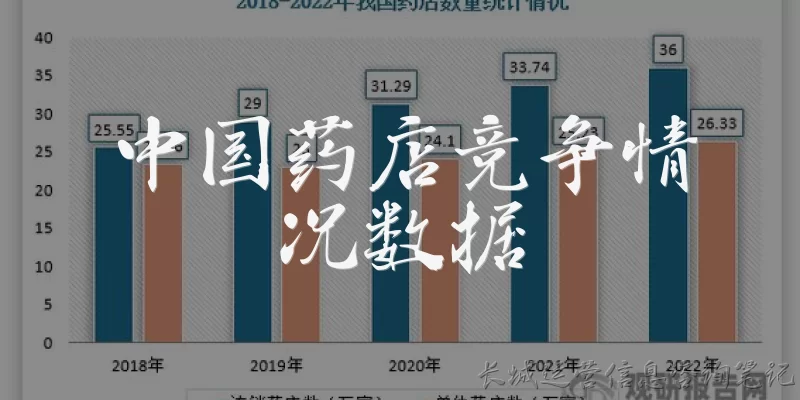
【Industry Expert】 Thanks. The total number of pharmacies in China reached 580,000 by the end of 2023, a 5.2% increase year-on-year. Chains account for about 57% of all pharmacies.
【Competitor Intelligence Specialist】 That's interesting. What about the top players? I've seen that the top 10 chains hold around 20% of the market. Is that accurate?
【Market Analyst】 Yes, the top 10 chains like Sinopharm, China Resources, and Yifeng have a combined market share of 21.3%. Their growth is driven by mergers and acquisitions.
【Industry Expert】 M&A activity has been intense. In 2023, there were 45 major M&A deals, up 30% from 2022. The average deal size was around 150 million RMB.
【Competitor Intelligence Specialist】 What about regional differences? I assume coastal areas have higher competition.
【Market Analyst】 Absolutely. Guangdong, Jiangsu, and Zhejiang have the highest pharmacy density, with over 3,000 pharmacies per province. In contrast, western regions like Gansu have fewer than 1,000.
【Industry Expert】 But competition is also heating up in lower-tier cities. Chains are expanding there to capture growth as tier-1 markets saturate.
【Competitor Intelligence Specialist】 How about online pharmacy competition? I've heard that e-commerce platforms are taking a bigger share.
【Market Analyst】 Yes, online pharmacy sales reached 200 billion RMB in 2023, growing at 25% annually. That's about 15% of total pharmacy sales. Alibaba Health and JD Health dominate.
【Industry Expert】 Regulatory changes have also impacted competition. The new drug distribution regulations require pharmacies to have licensed pharmacists, which favors larger chains.
【Competitor Intelligence Specialist】 So smaller independent pharmacies are struggling? What's their market share trend?
【Market Analyst】 Their share has dropped from 50% in 2018 to 43% in 2023. Many are closing or being acquired. The average independent pharmacy revenue is 1.2 million RMB, while chains average 2.5 million.
【Industry Expert】 But there's also a trend of specialty pharmacies focusing on chronic diseases and DTP (Direct-to-Patient) models. They compete on service, not just price.
【Competitor Intelligence Specialist】 What about pricing competition? Are there price wars in certain regions?
【Market Analyst】 In some urban areas, yes. For example, in Shenzhen, chains like Haiwang and Dashen have engaged in discount battles, lowering gross margins to around 25% from 35%.
【Industry Expert】 However, overall gross margins for chains are stable at 30-32% due to higher sales of private label products and health services.
【Competitor Intelligence Specialist】 What's the outlook for 2024? Any predictions?
【Market Analyst】 We expect continued consolidation. The top 10 chains could reach 25% market share by 2025. Online competition will intensify, but omnichannel strategies will be key.
【Industry Expert】 Agreed. Also, watch for government policies on drug pricing and insurance coverage, which could reshape competition. Thanks for the insights, everyone.