
Internet insurance market size:What is the projected size of the global internet insurance market in 2026?
Q: What is the projected size of the global internet insurance market in 2026?
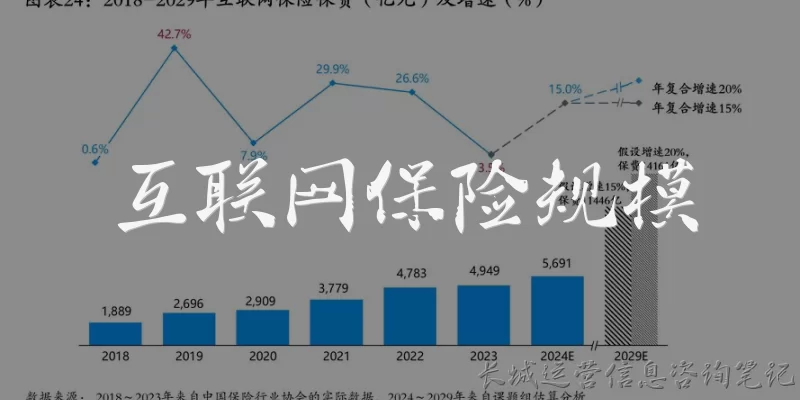
A: As of 2026, the global internet insurance market is estimated to reach approximately $285 billion in gross written premiums, reflecting a compound annual growth rate (CAGR) of around 12.5% since 2023. This growth is driven by accelerating digital adoption, the rise of embedded insurance partnerships, and increased consumer comfort with purchasing policies entirely online. Regionally, North America and Europe remain the largest markets, but Asia-Pacific is expanding fastest, particularly in China, India, and Southeast Asia, where mobile-first users are bypassing traditional agents. Key segments include auto, health, travel, and small business coverage. Insurtech startups and traditional carriers alike are investing heavily in AI-driven underwriting, instant claims processing, and personalized policy recommendations. Looking ahead, the market is expected to surpass $400 billion by 2029, as regulatory frameworks mature and open insurance APIs enable seamless integration with e-commerce and mobility platforms. However, challenges such as data privacy, cybersecurity, and underinsurance in emerging markets could temper growth if not addressed proactively.
Q: Which factors are driving the rapid growth of the internet insurance market size in 2026?
A: Several interconnected factors are fueling the expansion of the internet insurance market in 2026. First, changing consumer behavior: post-pandemic, over 65% of insurance shoppers now begin their journey online, expecting instant quotes and digital policy management. Second, technological maturity: AI and machine learning enable real-time risk assessment and dynamic pricing, while telematics and IoT devices support usage-based policies. Third, embedded insurance: retailers, automakers, and travel platforms now offer coverage at the point of sale, capturing previously underserved micro-moments. Fourth, regulatory support: several jurisdictions have introduced sandbox programs and digital-only insurer licenses, lowering entry barriers. Fifth, cost efficiency: online distribution reduces acquisition and servicing costs by up to 40% compared to traditional models. Finally, the proliferation of smartphones and improved internet penetration in developing nations brings millions of new customers into the formal insurance fold. Together, these drivers create a virtuous cycle: more data leads to better products, which attracts more users, further enlarging the market size and attracting additional investment from venture capital and incumbent insurers.
Q: How does the internet insurance market size vary by region in 2026, and which regions are growing fastest?
A: In 2026, the internet insurance market exhibits stark regional disparities. North America accounts for roughly 38% of global premiums, led by the U.S., where digital direct-to-consumer auto and home insurance is mainstream. Europe follows with about 27%, driven by strong insurtech ecosystems in the UK, Germany, and France, plus regulatory harmonization under GDPR-friendly data frameworks. Asia-Pacific represents the fastest-growing region, with a CAGR of 18% and a market size approaching $70 billion. China dominates via platforms like Alipay's Xianghubao, while India's Aadhaar-linked digital identity and UPI payments have enabled micro-insurance at scale. Latin America and the Middle East are smaller but emerging, with Brazil and the UAE showing double-digit growth from low bases. Africa remains nascent, though mobile money integration in Kenya and Nigeria is creating new distribution channels. Notably, cross-border insurtech collaborations are rising, allowing global carriers to enter high-growth markets with localized products. By 2027, Asia-Pacific is expected to overtake Europe in absolute market size, signaling a decisive shift in the global insurance landscape toward digital-first, mobile-centric regions.
Dialogue about
Common scenarios of "Internet insurance market size"
【Market Analyst】 Good morning, everyone. Today we're discussing the internet insurance market size. Let's start with a quick overview. According to recent reports, the global internet insurance market was valued at around $150 billion in 2023. What are your thoughts on this figure?
【Industry Expert】 That seems plausible, but I think it's important to define what we mean by 'internet insurance.' If we include all digitally distributed insurance policies, the number could be higher. Some estimates put it at $200 billion globally.
【Market Analyst】 Good point. Definitions vary. For our discussion, let's focus on insurance policies sold online directly to consumers or through digital platforms. That's the core of the internet insurance market.
【Tech Consultant】 From a tech perspective, the growth is driven by AI, big data, and mobile penetration. In China alone, the internet insurance market reached RMB 500 billion in 2022, which is about $70 billion. That's a significant chunk.
【Industry Expert】 Yes, China is a major player. But we should also consider North America and Europe. The US market is mature, with companies like Lemonade and Root leading the way. Their combined market cap is in the billions.
【Market Analyst】 Let's break it down by region. North America accounts for about 35% of the global market, Europe 25%, Asia-Pacific 30%, and the rest of the world 10%. Does that align with your data?
【Tech Consultant】 Roughly, but Asia-Pacific is growing faster. I'd say by 2025, Asia-Pacific could overtake North America. The compound annual growth rate (CAGR) in the region is over 20%.
【Industry Expert】 I agree. The CAGR globally is around 15-20%. If we assume a 18% CAGR, the market could double in about 4 years. So by 2027, we might see $300-400 billion.
【Market Analyst】 That's an optimistic projection. But we must consider regulatory hurdles and data privacy concerns that could slow growth in some regions.
【Tech Consultant】 True, but technology is also overcoming those hurdles. Blockchain for smart contracts, for example, can automate claims and reduce fraud, making internet insurance more attractive.
【Industry Expert】 Another factor is the shift in consumer behavior post-COVID. More people are comfortable buying insurance online. That's a permanent change.
【Market Analyst】 Let's quantify that. A survey showed that 60% of millennials prefer to purchase insurance online. That demographic is the future market.
【Tech Consultant】 And with embedded insurance, like when you buy a flight and get travel insurance automatically, the market expands beyond traditional channels. That could add another $50 billion.
【Industry Expert】 Embedded insurance is indeed a game-changer. It's projected to reach $700 billion globally by 2030, but that includes all types. For internet insurance specifically, it's a subset.
【Market Analyst】 So, to summarize, the current global internet insurance market size is estimated between $150-200 billion, with a strong growth trajectory. Key drivers: digital adoption, AI, embedded insurance, and changing consumer preferences.
【Tech Consultant】 And we should not forget the role of insurtech startups. They are innovating rapidly and capturing market share. Investment in insurtech reached $10 billion in 2023 alone.
【Industry Expert】 That investment fuels growth. But traditional insurers are also digitizing. So the market size will continue to expand as more players enter.
【Market Analyst】 Any final thoughts on the forecast for 2030? I've seen projections ranging from $500 billion to $1 trillion. Which is more realistic?
【Tech Consultant】 I'd lean towards the lower end, around $500-600 billion, assuming steady growth and no major disruptions. But if embedded insurance takes off, it could be higher.
【Industry Expert】 I agree. $500 billion by 2030 seems achievable. But we must monitor regulatory changes and economic conditions. Overall, the future looks bright for internet insurance.