Total Global Textile and Apparel Exports:What is the total global textile and apparel export value, and how has it changed in recent years?
Q: What is the total global textile and apparel export value, and how has it changed in recent years?
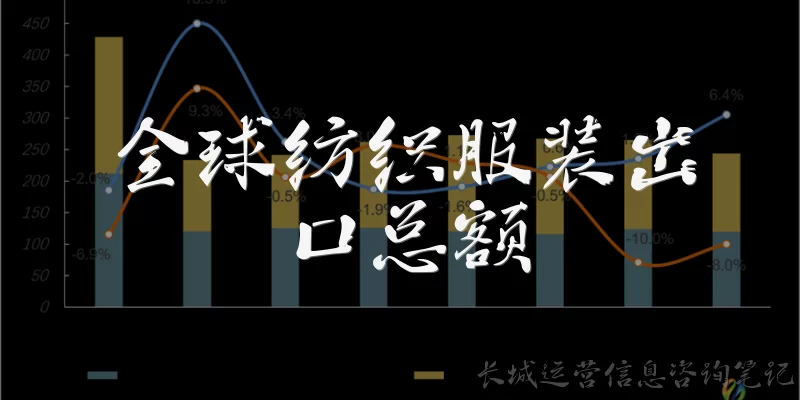
A: According to the World Trade Organization, total global textile and apparel exports reached approximately $915 billion in 2022, up from around $830 billion in 2021. This growth was driven by post-pandemic demand recovery in major markets like the United States and the European Union. However, in 2023, exports declined slightly to an estimated $880 billion due to inflation, reduced consumer spending, and geopolitical tensions. Over the past decade, the sector has grown at an average annual rate of about 3-4%, with textiles (yarns, fabrics) accounting for roughly 30% and apparel (garments) for 70% of the total. Asia remains the dominant exporting region, contributing over 60% of global shipments. Looking ahead, sustainability regulations and nearshoring trends could reshape export patterns, but overall volumes are expected to remain stable or grow modestly.
Q: Which countries are the largest exporters in total global textile and apparel trade?
A: China is by far the largest exporter, accounting for about 32% of total global textile and apparel exports in 2023, with shipments exceeding $280 billion. The European Union, as a bloc, ranks second with around 25% share, led by Germany, Italy, and Spain. Other major exporters include Vietnam (about 6%), Bangladesh (around 5%), Turkey (4%), and India (4%). Vietnam and Bangladesh have gained significant market share in recent years due to competitive labor costs and preferential trade agreements. The United States, despite being a major consumer, exports only about 3% of global total, primarily raw cotton and technical textiles. It is important to note that these figures include intra-EU trade. If intra-EU shipments are excluded, China's share rises to over 40%, followed by Vietnam, Bangladesh, and Turkey. This concentration means any supply chain disruption in Asia can significantly impact global totals.
Q: What are the key drivers affecting total global textile and apparel exports?
A: Several factors drive total global textile and apparel exports. First, consumer demand in major markets—the US, EU, and Japan—directly influences export volumes. Economic growth, disposable income, and fashion trends are critical. Second, production costs, especially labor and energy, determine competitiveness. Countries with lower wages, like Bangladesh and Vietnam, attract more orders. Third, trade policies such as tariffs, free trade agreements, and rules of origin shape export flows. For example, the US-China trade war led to a shift toward Southeast Asia. Fourth, logistics and shipping costs affect margins and delivery times. Fifth, sustainability and ethical sourcing pressures are pushing brands to diversify suppliers, boosting exports from countries with better compliance records. Finally, currency fluctuations can make exports cheaper or more expensive. All these drivers interact, making global textile and apparel exports a dynamic and complex system.
Q: How is the total global textile and apparel export market expected to evolve by 2030?
A: By 2030, total global textile and apparel exports are projected to reach between $1.1 trillion and $1.2 trillion, growing at a compound annual rate of 3-4%. This growth will be driven by population growth, urbanization, and rising middle classes in emerging economies. However, the market share distribution will likely shift. China's dominance may slowly erode as it moves up the value chain and loses cost advantages in basic apparel. Countries like Vietnam, Bangladesh, India, and Turkey are expected to gain share. Nearshoring to Mexico, Eastern Europe, and North Africa could also increase as brands seek faster replenishment and lower carbon footprints. Digitalization, including 3D printing and on-demand manufacturing, may reduce the need for mass exports of standardized goods. Additionally, sustainability regulations like the EU's carbon border tax could favor exporters with cleaner production. Overall, the total will grow, but the winners will be those adapting to efficiency, compliance, and speed.
Dialogue about
Common scenarios of "Total Global Textile and Apparel Exports"
【Trade Analyst】 Good morning, everyone. Today we're discussing the total global textile and apparel exports. According to the latest WTO data, the total export value reached $915 billion in 2022. What are your thoughts on this figure?
【Economist】 That's a significant number, but it's important to note that this includes both textiles and apparel. Textiles alone were around $350 billion, while apparel was about $565 billion. The growth rate has been moderate, around 5% annually over the past decade.
【Industry Expert】 Yes, and China remains the dominant player, accounting for about 32% of global exports. However, other countries like Vietnam, Bangladesh, and Turkey are gaining market share, especially in apparel.
【Trade Analyst】 That's true. Vietnam's exports have been growing rapidly, reaching $44 billion in 2022. Bangladesh is also close behind at $45 billion. What factors are driving this shift?
【Economist】 Several factors: lower labor costs, trade agreements, and supply chain diversification. Many companies are moving production out of China to reduce risks and costs. Also, the pandemic exposed vulnerabilities in concentrated supply chains.
【Industry Expert】 Additionally, regional trade agreements like the EU-Vietnam FTA and the African Continental Free Trade Area are boosting exports from those regions. Africa's textile exports are still small but growing at over 10% annually.
【Trade Analyst】 What about the impact of sustainability and circular economy trends? Are they affecting export patterns?
【Economist】 Absolutely. There's a growing demand for sustainable textiles, which often come from Europe and North America. But developing countries are also adopting greener practices to remain competitive. The EU's new textile strategy could reshape global trade flows.
【Industry Expert】 Yes, and digitalization is playing a role too. E-commerce and digital platforms are enabling smaller producers to export directly. But logistics and infrastructure remain challenges in many developing countries.
【Trade Analyst】 Let's look at regional breakdowns. Asia dominates with about 60% of global exports, followed by Europe at 25%, and the Americas at 10%. Africa and Oceania share the rest. Any surprises?
【Economist】 Not really. But within Asia, China's share is slowly declining, while Southeast Asia's is rising. Europe's exports are high-value, focusing on technical textiles and luxury apparel.
【Industry Expert】 Also, intra-regional trade is significant. For example, within the EU, many textile and apparel products are traded among member states. That's often overlooked in global totals.
【Trade Analyst】 Good point. What about the future outlook? The WTO projects global textile and apparel trade to reach $1.2 trillion by 2030. Do you agree?
【Economist】 That seems plausible, but it depends on global economic growth, trade policies, and geopolitical factors. If protectionism rises, growth could be slower. Also, automation and 3D printing might reduce the need for imports in some countries.
【Industry Expert】 I'd add that consumer preferences are shifting towards quality and sustainability over quantity. This could lead to higher-value exports but lower volumes. So the value might grow, but the volume growth could be modest.
【Trade Analyst】 What about the role of small and medium enterprises (SMEs) in global exports? They are often the backbone of the industry.
【Economist】 SMEs contribute significantly, especially in developing countries. But they face barriers like access to finance, technology, and international markets. Trade facilitation and capacity building are crucial to integrate them into global value chains.
【Industry Expert】 Yes, and platforms like Alibaba and TradeIndia are helping SMEs reach global buyers. But competition is fierce, and they need to innovate to survive.
【Trade Analyst】 Any final thoughts on key trends to watch?
【Economist】 Keep an eye on nearshoring, sustainability regulations, and digital trade agreements. These will shape the future of global textile and apparel exports.